


Last Will and Testament with Trust
A last will and testament with trust, also known as a testamentary trust, describes a person’s wishes regarding the distribution of his or her assets upon death and allows the person to put assets into trusts that will go into effect upon death.
Select a state


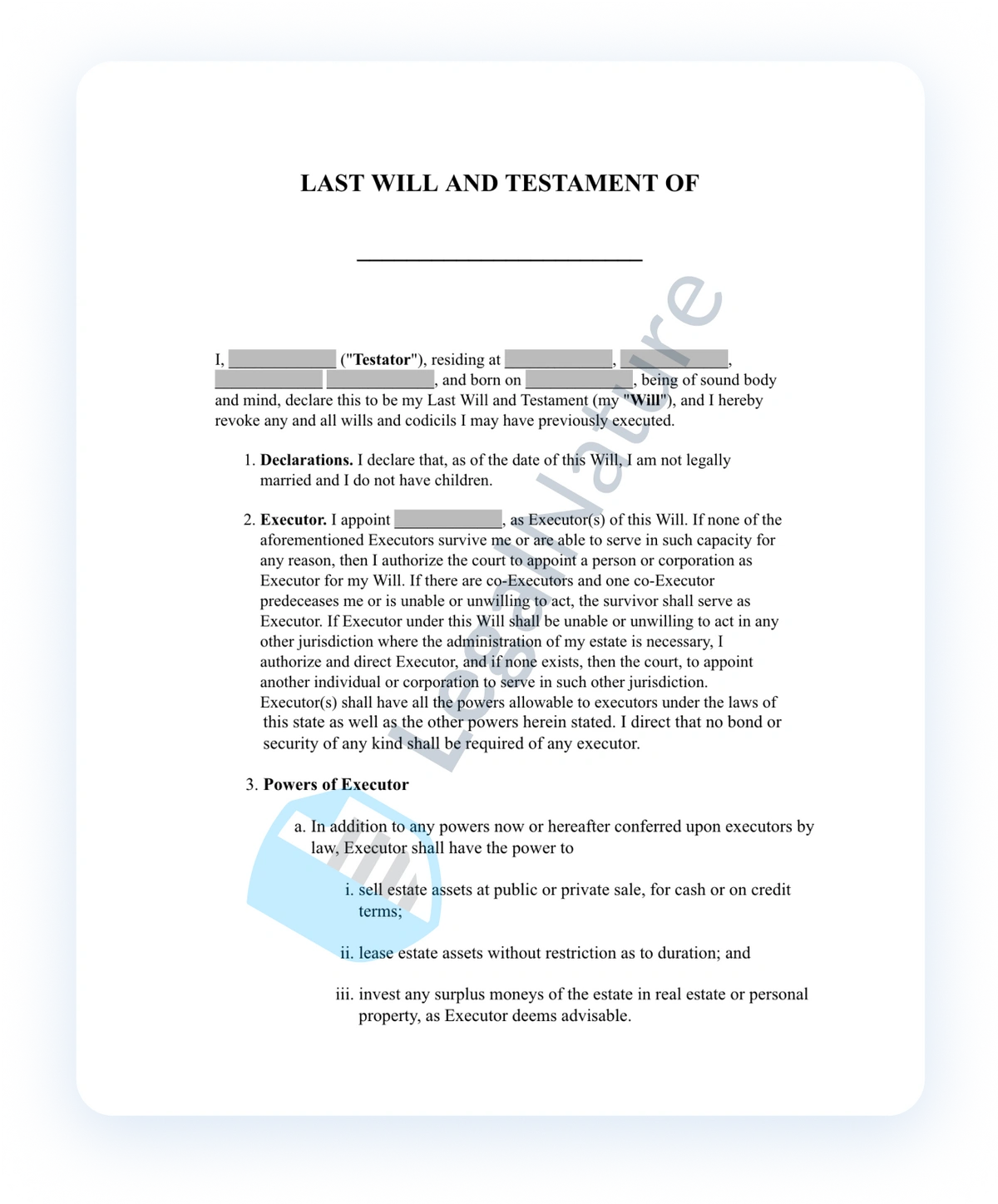
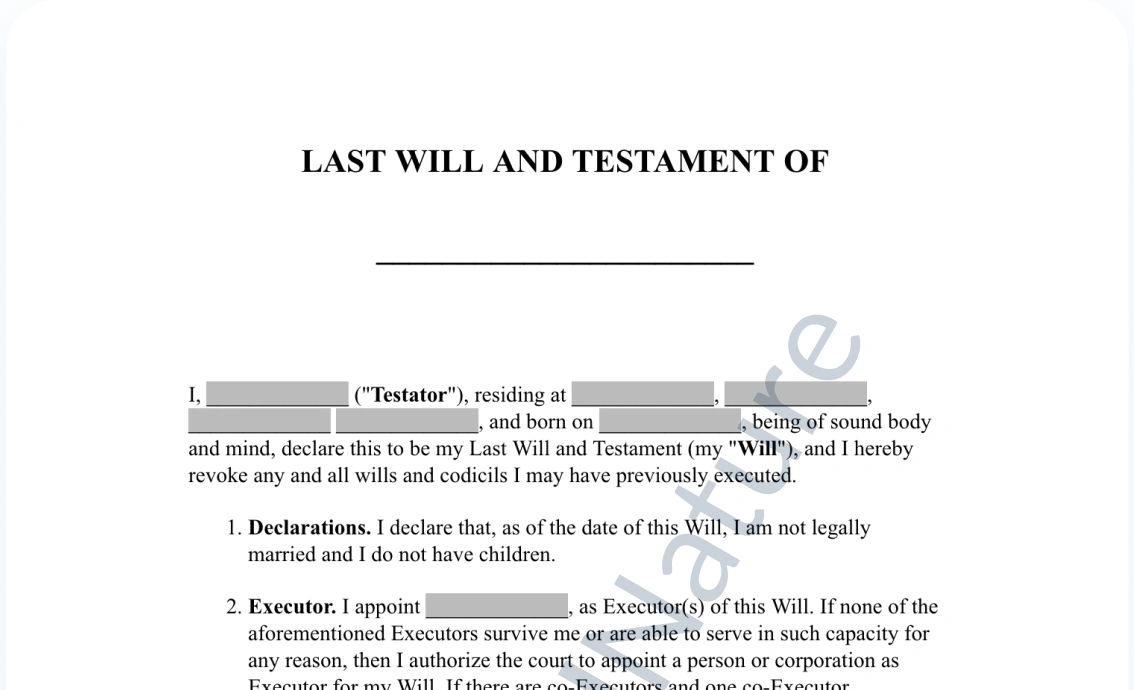
What is a last will and testament with trust?
A last will and testament with trust, or testamentary trust, is a type of trust that is created through instructions in a person’s last will and testament, and it only comes into existence after the person (the grantor or testator) has died. Unlike living trusts, which are established and funded during the grantor’s lifetime, a testamentary trust is formed and funded through the probate process following the grantor’s death.
Choose the estate planning document that is right for you
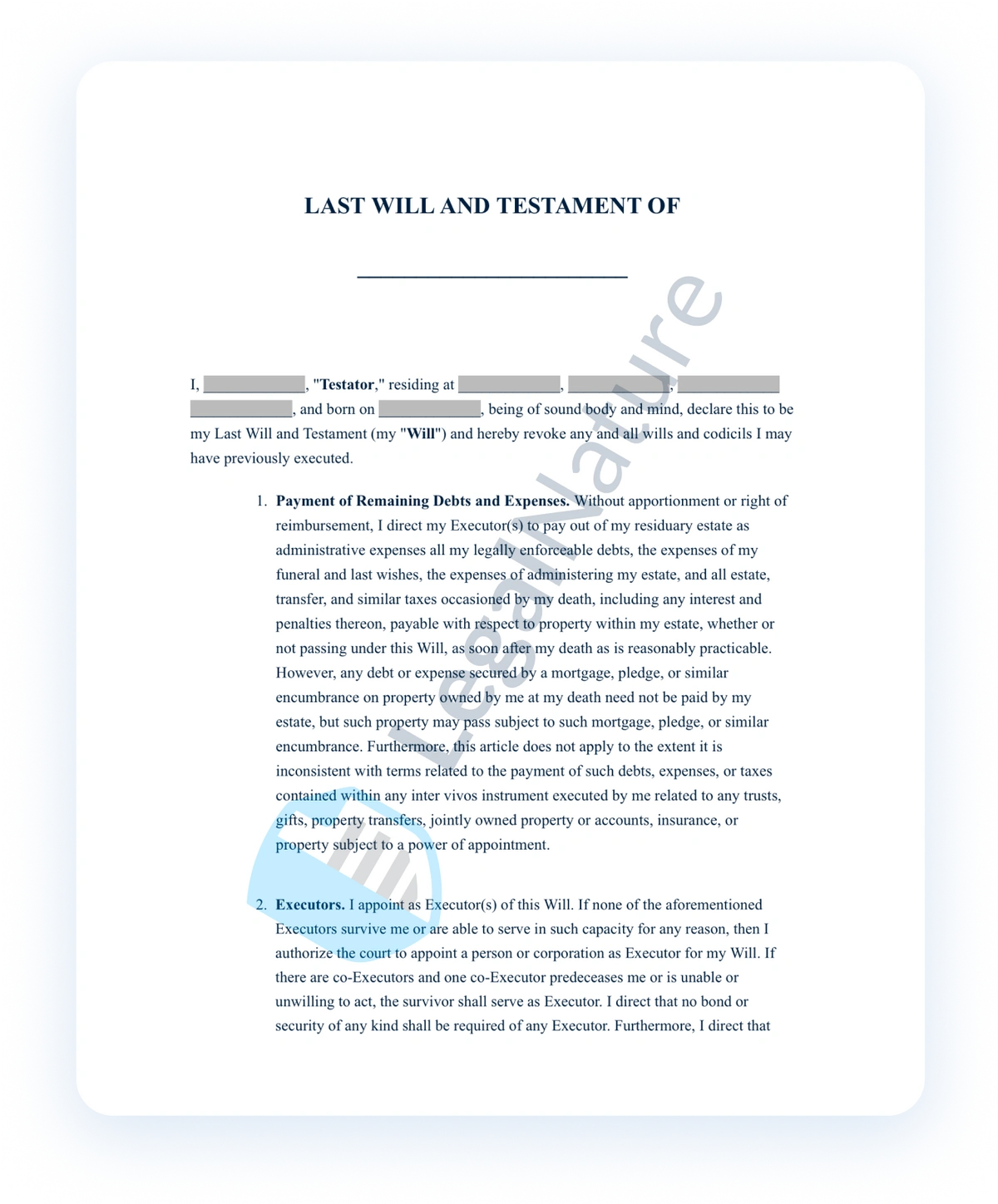
Last Will and Testament An estate planning tool that designates how and to whom a person would like to distribute assets and property following their death.
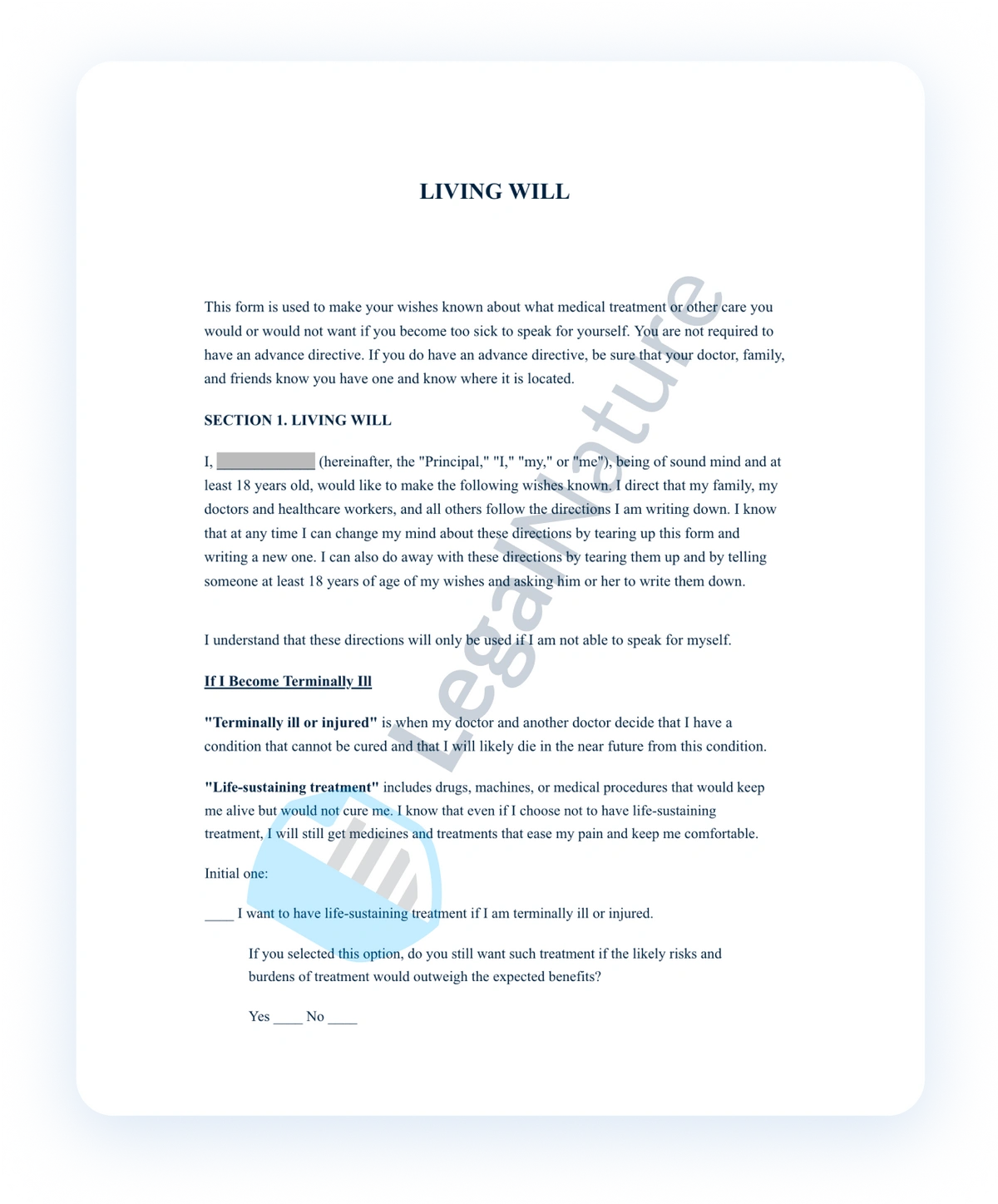
Living Will An advance healthcare directive which allows you to clarify all medical wishes and instructions upfront in the event you become incapacitated so that no misunderstandings occur when it is too late.
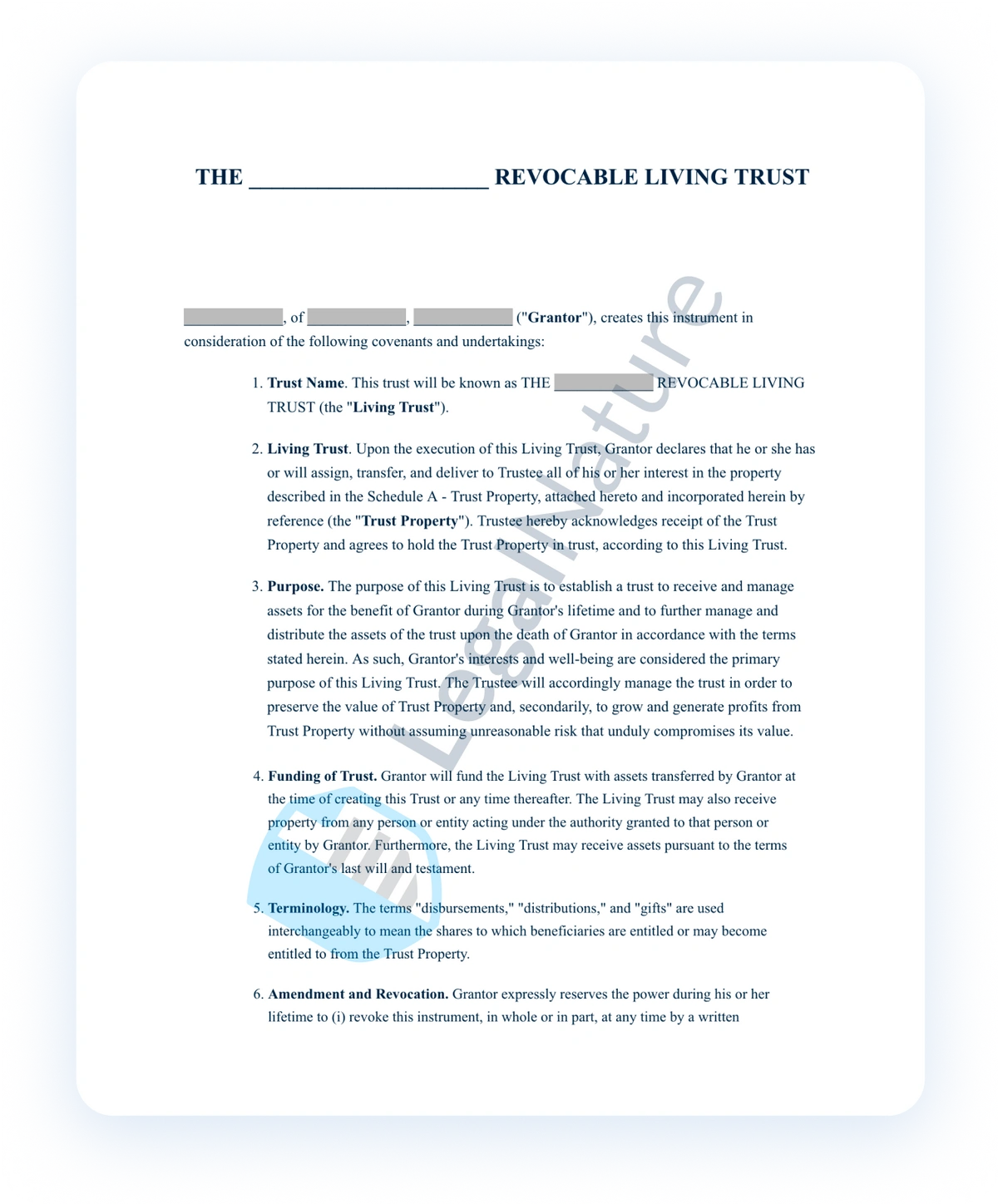
Revocable Living Trust Used for securing more control over one's assets during life and then efficiently transferring those assets upon death by containing them securely within a trust. A revocable living trust may be used to avoid probate court and court fees.
Create a testamentary trust in your state
When to use a last will and testament with trust
A last will and testament with trust, or testamentary trust, is often implemented in the following situations:
-
Providing for Minor Children or Young Beneficiaries: If you have children who are minors or young adults, a testamentary trust allows you to specify at what age or under what conditions they should receive their inheritance, rather than giving them an outright lump sum.
-
Supporting Beneficiaries with Special Needs: Testamentary trusts are often used to provide for beneficiaries with disabilities or special needs. Properly drafted, these trusts can help maintain the beneficiary’s eligibility for public benefits such as Medicaid or Supplemental Security Income (SSI), since the assets in the trust are not counted as the beneficiary’s own.
-
Blended Families: In cases involving blended families, a testamentary trust can ensure that a surviving spouse is provided for during their lifetime, while ultimately preserving assets for children from a previous marriage.
-
Spendthrift or Vulnerable Beneficiaries: If you are concerned that a beneficiary may not manage an inheritance responsibly (for example, due to poor financial habits or vulnerability to creditors), then a testamentary trust can protect the assets and give you more control over distributions.
-
Asset Protection and Family Disputes: Testamentary trusts can help protect assets from creditors or claims in divorce, and can reduce family disputes by clearly outlining how and when assets are to be distributed.
-
Cost and Simplicity: Testamentary trusts are generally less expensive to set up than living trusts, as they are created within a will and only come into effect after death. This can be appealing for those with simpler estates or limited resources.
-
Medicaid and Elder Law Planning: Testamentary trusts can be used in Medicaid planning to protect a spouse’s eligibility for benefits, ensuring that inherited assets do not disqualify them from receiving care.
If avoiding probate court, maintaining privacy, or ensuring immediate access to assets is important, then a living trust may be more suitable, as testamentary trusts require the probate process and become part of the public record.
How to create your last will and testament with trust in 3 easy steps
Gather Information
As you complete your testamentary trust, you will need to provide certain relevant information. This includes the name and address of each beneficiary and how any assets will be distributed.
Complete Our Short Questionnaire
Use the information you collected to complete the testamentary trust. We make this easy by guiding you each step of the way and helping you to customize your document to match your specific needs.
Review and Sign
It is always important to read your document thoroughly to ensure it matches your needs and is free of errors and omissions. Some states may require that the testamentary trust is signed and witnessed by at least two individuals in the testator's presence.
Why create a last will and testament with trust?
Creating a testamentary trust offers several key advantages for estate planning:
-
Asset Protection: Testamentary trusts can shield assets from creditors, lawsuits, or potentially irresponsible financial decisions made by beneficiaries, since the trust—not the individual—holds legal title to the assets.
-
Control Over Distribution: These estate planning documents allow you to specify exactly how and when you want to distribute assets. For example, you can require that beneficiaries reach a certain age or milestone (such as graduating college) before receiving funds, which is especially valuable if you have minor children or beneficiaries who may not be ready to manage a large inheritance.
-
Support for Special Needs and Vulnerable Beneficiaries: Testamentary trusts can be structured to provide for beneficiaries with disabilities or special needs without jeopardizing their eligibility for government benefits like SSI or Medicaid. They are also useful for beneficiaries who may lack financial maturity or are otherwise vulnerable.
-
Tax Efficiency: In some jurisdictions, testamentary trusts can be structured to minimize estate or income taxes, potentially preserving more wealth for your beneficiaries.
-
Flexibility and Modifiability: Because the trust is created through your will, you can change its terms at any time before your death by updating your will, offering flexibility as your circumstances or wishes evolve.
-
Cost-Effective for Smaller Estates: Testamentary trusts are generally less expensive to set up than living trusts and only take effect after death, making them a practical option for those who may not want to incur the costs of a trust during their lifetime.
-
Blended Families and Complex Family Situations: They are particularly useful for blended families, allowing you to support a surviving spouse while ultimately ensuring assets pass to children from a previous marriage, or to prevent family disputes over valuable or sentimental assets.

Why choose LegalNature?
Last will and testament with trust guide
Below, you will find a detailed description of each of the main components of the testamentary trust. Note that some of these sections may be omitted from your document depending on how you answer the relevant questions.
The primary role of last will and testament with trust is to identify how assets and liabilities will be handled after the testator—the person creating the testamentary trust —dies, then appointing a third party (trustee) to manage assets on behalf of the beneficiaries. After payment of the debts, taxes, and expenses of administering the estate, the remaining assets that pass through the will are distributed according to its terms.
Testamentary trusts also serve to identify who will be in charge of handling the estate and take care of administrative tasks like safeguarding assets, paying final expenses, settling and paying valid debts, and filing and meeting any final tax obligations. All this occurs before any distributions to named beneficiaries and heirs are made. The person in charge of handling the estate is called different things in different states, but most commonly that person is known as the personal representative or executor of the estate.
A testamentary trust can also nominate a guardian to have physical custody of minor children if a child’s parents die before he or she reaches legal age.
Introductory Language
The paragraph appearing immediately after the title identifies the testator, lists the testator’s address, and states that the testator is creating the testamentary trust in sound body and mind. This means that the testator has the mental capacity to understand the contents of the testamentary trust and so intends to create it. The final sentence explains that any prior wills or codicils (amendments to wills) that may exist are no longer valid after executing the testamentary trust. “Executing” here simply means the testator’s act of signing the testamentary trust in the presence of witnesses.
Declarations
The first section states the testator’s marital status as of the date of signing and identifies the names of any living children (biological or adoptive) that the testator may have.
Payment of Remaining Debts and Expenses
Next, the testator will direct that all of his or her remaining debts and expenses are to be repaid out of the residuary estate. The “residuary estate,” or “residue,” is the portion of the testator’s estate comprised of which assets remain after paying the testator’s final debts and expenses and after any specific gifts named in the testamentary trust have been given. By law, your legally enforceable debts must be repaid upon your death, if possible. Other expenses that need to be paid may include funeral arrangement expenses, final healthcare expenses, any court fees accrued throughout the legal probate process, and any outstanding taxes.
General Instructions
This clause instructs that any beneficiary under the testamentary trust must survive, or outlive, the testator by at least 30 days to receive a gift under the testamentary trust. This 30-day requirement is a common legal convention that simplifies the probate process—and the confusion that often ensues—in situations where the testator and the beneficiary may both die around the same point in time due to suffering severe injuries from a catastrophic accident.
Tangible and Intangible Personal Property
In this section the testator makes gifts to specific beneficiaries of his or her tangible and intangible property. “Tangible” personal property is any physical asset the testator owns besides real estate, including cars, furniture, jewelry, paintings, etc. “Intangible” personal property is any non-physical asset owned by the testator, such as bank accounts, stocks, bonds, retirement bank accounts, and insurance policies. If the first-choice beneficiary does not survive the testator, then the gift will go to the alternative beneficiary listed. If the alternative beneficiary does not survive the testator, then the gift will be placed into the residuary estate and pass to whatever beneficiary or beneficiaries are due to receive such property. Note that you may designate two or more co-beneficiaries to receive a gift under the testamentary trust. For instance, the testator may name her spouse as the first-choice beneficiary and name all of her children as alternative co-beneficiaries to receive the gift in the event that her spouse does not survive her. Property may also be held in trust for children until they become a certain age specified in the trust.
Digital Assets
The testator may specify beneficiaries to receive any of his or her digital assets. These include things like online accounts, social media profiles, photos, and other electronically stored information. All digital assets that do not go to specific beneficiaries will be placed into the residuary estate and pass to whatever beneficiary or co-beneficiaries are due to receive such property.
Estate Disposition/Residue
If the testator chooses to make a general gift of all of his or her property, then this section will name the beneficiary or co-beneficiaries to receive the testator’s entire estate. If not, then this section will identify the beneficiary and alternative beneficiary to receive the residuary estate. Again, the “residuary estate,” or simply the “residue,” is made up of the testator’s remaining assets left over after paying the testator’s final debts and expenses and after any specific gifts named in the testamentary trust have been given. If no beneficiary survives the testator, then the residuary estate will pass to the testator’s heirs. The laws that determine how a person's beneficiaries receive property are often complicated, but such property generally is given to the testator’s spouse or closest living blood relative.
Executors
This section appoints the executor or co-executors that will be responsible for administering and distributing the estate after the testator’s death. If the first-choice executor is unavailable or unwilling to serve, then the alternative executor named will serve. If none of the named executors are able to serve, then the court will appoint one.
Depending on your answers to the questions, the executors may be required to post a bond to secure against mishandling of the estate funds and may be required to receive reasonable compensation for their services.
Finally, the terms of this section allow the executors to utilize any expedited procedures or unsupervised processes that may be available under state law to administer the estate as quickly and efficiently as possible.
Executor Powers
Next, the testamentary trust lists the powers available to the executor in administering the estate. Examples include the following powers: to sell, lease, and invest estate assets; to distribute gifts to minor beneficiaries to a minor’s guardian or to postpone payment until the minor reaches the age of majority; and to distribute gifts either in cash, in kind, or partly in cash and partly in kind. Note that this is not an exhaustive list of powers and more may be available under state law. The executor may always look online or ask the probate court if there are ever any questions as to what actions he or she may take. Also, keep in mind that, although the executors have such powers, they must always seek to carry out the intent of the testator as much as possible. Therefore, these powers should be viewed as tools for carrying out the testator’s wishes.
Trustees
This section appoints the trustee or trustees that will be responsible for managing the assets on behalf of the beneficiaries. You may also appoint a successor trustee in case of the event that your trustee is unable or unwilling to carry out their duties. Next, the testamentary trust lists the powers available to the executor in administering the estate.
No Liability
The executors may not be held liable for any wrongdoing so long as they distribute assets in compliance with the testamentary trust. Unforeseen complexities in administering an estate may sometimes scare good executors away from serving. This language reassures them that they will not be exposed to personal liability for trying to carry out the testator’s wishes.
Otherwise Incapacitated Beneficiary
All beneficiaries must have the requisite level of mental capacity to accept and receive gifts. Gifts left to beneficiaries who are incapacitated will be disbursed to them when they regain capacity, when they die, or when the executor so determines it is appropriate in his or her reasonable discretion.
Gifts given to a Beneficiary during My Lifetime
If a beneficiary receives a gift specified under the testamentary trust during the testator’s lifetime, then such gift will be deemed to have been satisfied upon the testator’s death.
Simultaneous Death
If the testator is married, then this clause appears stating that the testator’s spouse will be deemed to have survived the testator should they both die under circumstances in which the order of their deaths is uncertain. This clause, therefore, departs from the general rule under the testamentary trust that beneficiaries must survive the testator by at least 30 days to receive a gift.
Guardians of Minor Children
If the testator has minor children living (biological or adoptive), then this clause appears stating that the named guardian will receive custody of the children in the event the testator dies without a surviving spouse. An alternative guardian is appointed in case the first-choice guardian is unable to serve.
Guardian Powers
If the testator has minor children living (biological or adoptive), then this clause is included to give the guardian the same powers as a parent having legal custody of the children. The guardian is required to see to it that the children have reasonable visitation with members of their immediate family members.
After-Born or Adopted Children
Should the testator have any children born or adopted after signing the testamentary trust, then this clause operates to prevent the testamentary trust from being invalidated and to require that such children be treated similarly as any other children already included under the testamentary trust.
Intestate Disposition
Any estate assets in the residuary estate that do not go to the beneficiary or co-beneficiaries designated to receive such property will be distributed to the testator’s heirs following intestate succession. This is essentially a safety net in case any property in the residuary estate is not validly disposed of by the testamentary trust.
Pet Care
If you opt to include this section, then it names a person to care for one or more of the testator’s pets after the testator’s death and provides pet care instructions. You may have also chosen to provide a certain sum of money to the caregiver for the support of the pets.
Disposition of Remains
If you choose to include it, then in this section the testator sets forth his or her wishes regarding any funeral arrangements and how his or her remains should be disposed of (e.g. by burial, cremation, etc.).
Interpretation and Captions
When construing the meaning of the terms used in the testamentary trust, words will be considered to include either or both genders and to include the singular and plural. Section captions or headers are included for reference only and do not affect the meaning of the testamentary trust.
Omission Acknowledgments
If you include it, this section identifies any persons that the testator specifically and intentionally means to leave out of the testamentary trust (e.g. a disinherited spouse or child).
Testator’s Signature
When the testator has carefully read all of the terms of the testamentary trust, in most states he or she must sign it in the presence of at least two disinterested witnesses. This means that the witnesses should not be beneficiaries under the testamentary trust or have any other conflict of interest in witnessing the signing. The testator must also have the mental capacity to understand the contents of the testamentary trust and that he or she is signing it. If the testator is merely physically unable to sign, then he or she may designate someone else to sign on his or her behalf. Finally, the testator must sign freely and not under duress or undue influence from others.
Witness Acknowledgment
In most states the testator and the witnesses must all be at least 18 years of age and must sign in the presence of each other (everyone should see each other sign). The acknowledgment affirms their ages, that the testator is of sound mind and memory, and that the signature was not procured fraudulently.
Notary Acknowledgment
For certain states, a notary section will be attached. Although not required, it is recommended that a notary also witnesses the signing, which will help prove the authenticity of the testamentary trust should it ever become a legal matter challenged in court.
Self-Proving Affidavit
In states that allow it, a self-proving affidavit appears at the end of the document. Although not required, it is recommended that the two witnesses and a notary sign this affidavit, which will help prove the authenticity of the testamentary trust should it ever be challenged in court.
Frequently asked questions
What is a testamentary trust inside of a will?
A will generally identifies certain people as beneficiaries of assets that will be distributed in full when the estate is settled.
A testamentary trust is a way to establish trust provisions that provide for ongoing management of assets for the named beneficiaries for a period of time. Unlike a revocable living trust, which is effective during the trust creator’s lifetime, a testamentary trust does not spring into being until the will is administered after the person’s death.
Testamentary trusts can be used to provide for long-term management of assets and are often used when beneficiaries are minors. The trust provisions generally give a named trustee the authority to make distributions for the beneficiary’s health, education, support, and maintenance. Testamentary trust provisions should also identify under what conditions a lump sum distribution could be made. For instance, this may occur when a child reaches a certain age.
Do I need a will?
Every adult needs to do at least some estate planning, even while young and healthy. In many cases, a will is a key part of an estate plan.
Specifically, wills are an important planning tool for those who want to make sure that their wishes are formally and legally documented by specifying how their estate should be managed and distributed after they die.
Those with one or more minor children should also consider creating a will to make sure that they have identified contingency plans for the custody of their children in case both parents die prematurely.
Can I disinherit someone in my will?
Wills are governed by state law. In most states, you can disinherit a child, but you cannot completely disinherit a spouse.
One of the reasons someone may choose to create a will is to document his or her wishes for distributing assets unevenly among named beneficiaries or completely disinheriting someone altogether.
If you choose to disinherit a family member, it is a good idea to ensure that your will includes language confirming that any omissions are intentional and are not the result of a mistake. This can help avoid litigation brought by someone who felt they should have inherited a share of your estate. It is also important to note that if any undistributed assets remain in the residue of the estate, any heirs not explicitly disinherited might still receive from the residue.
Can I change my will?
You are free to update your will at any time. In fact, it is highly recommended that you review your will periodically to ensure that it still echoes your wishes and reflects the contents of your estate. There are two ways to change your will. Firstly, for minor changes, you can make a document called a codicil. This document will state the changes you wish to make and will be attached to your will. Alternatively, you can make a new will if you need to make more extensive updates. It is always a good idea to destroy all copies of any old wills and to notify the relevant people.
How often should I revise my will?
It is always a good idea to revisit your existing will and other estate planning documents when a major life event occurs. Examples include getting married; getting divorced; the birth, adoption, or death of a child; becoming disabled; or significant changes to your financial situation. As state laws govern the interpretation of a will, moving to another state is also a good time to examine your estate plan to ensure that it is still doing what you want it to do.
Similarly, if someone you named to play a role in the management of your estate dies or become disabled, or if one or more named beneficiaries dies, it is a good idea to review your will and consider making changes.
In addition to these types of major life events, a good rule of thumb is to review your will and other estate planning documents every three to five years. If changes are warranted, remember that they usually need the same legal formalities as creating a new will.
Do I need to register my will?
No state requires that you register your will; however, it is important that your named executor and beneficiaries at least know the location of your will or are given copies. If you do decide to register your will, you should contact your local probate court or Secretary of State’s Office to see if your state offers this service. Alternatively, there are private companies that will register and hold a copy of your will. Both state and private companies normally charge a fee for this service.
Is my will valid if I move out of state?
Yes; all states are required to recognize and uphold wills from other states. However, local laws may affect how your estate is treated. For example, property may be treated differently when moving from a community property state to a common law property state. If moving abroad, there are no guarantees that your last will and testament will remain valid. When moving, it is recommended that you seek advice on the impact it will have on your estate plan.
Does having a will eliminate the need for the probate process?
A valid and legal will does not eliminate the need for a probate court proceeding to wind down someone’s estate; however, it can help streamline the process in many cases, making it faster and simpler.
Whether or not your estate will need to go through a probate court proceeding in your state will depend on your state’s laws and the laws of any other states where you may own real property (real estate). In most states, there is no need for probate court if the total assets that pass through the will (“probate assets”) are under a certain dollar amount, as determined by state law.
Can a will include guardianship provisions for my minor children?
Yes. One of the primary reasons many young parents decide to create a will is to plan for the worst-case scenario by nominating someone to have physical custody of their minor child or children in the event of the parents’ premature deaths.
If you decide to nominate a guardian in your will, it is recommended that you discuss your wishes with the person you want to name ahead of time. Becoming a legal guardian for someone else’s child is a big responsibility. You may also want to name one or more successor guardians if the first named person declines or is not able to serve in that role for your children.
Can my will authorize someone to handle my digital assets when I die?
A majority of states have adopted some version of the Uniform Fiduciary Access to Digital Assets Act (UFADAA). These laws generally state that a person creating a will can authorize a designated person to act as a fiduciary for electronic accounts, digital files and records, hardware, software, social media accounts, websites, and any other digital records someone owns at the time of their death.
Generally speaking, the designation in a will or trust instrument covers accounts or other assets for which the account owner did not already designate a fiduciary directly with the service provider (like Facebook) and accounts where the provider’s terms of service fail to provide instructions on what happens to the digital account or asset when the owner dies.
Where should I keep my will?
In the event that your will needs to go through a probate court proceeding, having the original document may make that process easier for your nominated personal representative or executor. Therefore, it is important that he or she is able to access the document.
Your will is an important legal document, so keep it in a safe place. This can be a safe deposit box if someone else knows it is there and has authorization to access the box at the bank or other financial institution. Keeping your executed will in a home safe, fireproof safe, or another place inside your home can also be effective, as long as your personal representative or executor knows where to find it.
Generally, there is no need to file or register your will with any state or county government authority; although some jurisdictions allow people to file their wills for safekeeping for only a nominal fee. A law firm on retainer will also often allow you to keep your will with them.
Create your last will and testament with trust in minutes
Complete our form
;fill-opacity:1;'/%3e%3cpath%20fill-rule='evenodd'%20clip-rule='evenodd'%20d='M7.17816%205.46484C8.48591%205.46484%209.81742%206.23165%2011.1727%207.76529C10.8517%208.08628%2010.6467%208.28838%2010.5575%208.3716C10.4683%208.45482%2010.2514%208.6391%209.90659%208.92442C9.56182%209.20975%209.28244%209.40591%209.06844%209.51291C8.85445%209.6199%208.5721%209.73285%208.22138%209.85173C7.87067%209.97062%207.52293%2010.0301%207.17816%2010.0301C6.75017%2010.0301%206.35785%209.97656%206.00119%209.86957C5.64453%209.76257%205.28788%209.5783%204.93122%209.31675C4.57456%209.0552%204.29518%208.83229%204.09307%208.64801C3.89096%208.46374%203.58781%208.16355%203.18359%207.74745C3.95636%206.97469%204.64291%206.40107%205.24329%206.02658C5.84367%205.65209%206.48862%205.46484%207.17816%205.46484ZM7.17816%209.37024C7.61804%209.37024%207.9955%209.20975%208.31055%208.88876C8.6256%208.56776%208.78312%208.18733%208.78312%207.74745C8.78312%207.30757%208.6256%206.92714%208.31055%206.60615C7.9955%206.28516%207.61804%206.12466%207.17816%206.12466C6.73828%206.12466%206.36082%206.28516%206.04577%206.60615C5.73072%206.92714%205.5732%207.30757%205.5732%207.74745C5.5732%208.18733%205.73072%208.56776%206.04577%208.88876C6.36082%209.20975%206.73828%209.37024%207.17816%209.37024ZM7.17816%207.1768C7.17816%207.34324%207.23166%207.47996%207.33865%207.58696C7.44565%207.69395%207.58237%207.74745%207.74881%207.74745C7.8677%207.74745%207.98658%207.70584%208.10547%207.62262V7.74745C8.10547%208.009%208.01631%208.23191%207.83798%208.41619C7.65965%208.60046%207.43971%208.6926%207.17816%208.6926C6.91661%208.6926%206.69667%208.60046%206.51834%208.41619C6.34001%208.23191%206.25085%208.009%206.25085%207.74745C6.25085%207.4859%206.34001%207.26299%206.51834%207.07872C6.69667%206.89444%206.91661%206.80231%207.17816%206.80231H7.32082C7.22571%206.9212%207.17816%207.04603%207.17816%207.1768Z'%20fill='white'%20style='fill:white;fill-opacity:1;'/%3e%3c/svg%3e)
Preview and download your document
;fill-opacity:1;'/%3e%3cg%20clip-path='url(%23clip0_10486_8655)'%3e%3cpath%20d='M10.8931%205.49519C10.8004%205.45343%2010.6879%205.48908%2010.6427%205.57565L10.4595%205.92398L10.3128%205.85879L10.5058%205.49212L10.5069%205.48906C10.508%205.48703%2010.5091%205.48397%2010.5103%205.48194C10.54%205.4137%2010.5743%205.33324%2010.5864%205.24258C10.6239%204.97267%2010.5125%204.68749%2010.2874%204.47869C10.0733%204.28007%209.74562%204.16804%209.43445%204.18534C9.36934%204.18942%209.29984%204.20062%209.22812%204.21998C9.11446%204.25053%209.00302%204.30349%208.8982%204.37785C8.82316%204.4308%208.71833%204.52146%208.64661%204.64877L8.64551%204.65184L8.64441%204.65387L7.9603%205.95657C7.95698%205.96166%207.95369%205.96675%207.95037%205.97286C7.94705%205.97795%207.94485%205.98406%207.94265%205.99017L6.17057%209.36151C6.14408%209.41244%206.13085%209.46947%206.13305%209.5265V9.52752L6.17277%2010.6143C6.17718%2010.7202%206.22022%2010.819%206.29194%2010.8964L6.18712%2011.0919C6.14078%2011.1775%206.1794%2011.2814%206.27207%2011.3242C6.29856%2011.3364%206.32724%2011.3425%206.35483%2011.3425C6.42435%2011.3425%206.49056%2011.3069%206.52366%2011.2458L6.62516%2011.0553C6.64061%2011.0563%206.65495%2011.0573%206.6704%2011.0573C6.77412%2011.0573%206.87673%2011.0278%206.9628%2010.9687L7.91392%2010.325C7.93379%2010.3118%207.95254%2010.2955%207.96909%2010.2792C7.97241%2010.2761%207.97461%2010.2731%207.97793%2010.27C7.9989%2010.2476%208.01655%2010.2222%208.0309%2010.1957L10.1483%206.16942L10.2951%206.23461L9.35169%208.02823C9.30645%208.11379%209.34507%208.21768%209.43886%208.25943C9.46535%208.27165%209.49293%208.27674%209.52052%208.27674C9.59004%208.27674%209.65735%208.24109%209.68935%208.17896L10.7023%206.25293C10.7078%206.24581%2010.7133%206.23766%2010.7177%206.2295C10.7222%206.22134%2010.7244%206.21422%2010.7277%206.20606L10.9804%205.72533C11.0255%205.64082%2010.9858%205.53694%2010.8931%205.49519ZM6.73994%2010.6907C6.70574%2010.7131%206.6627%2010.7182%206.62408%2010.7049C6.61857%2010.7019%206.61305%2010.6988%206.60643%2010.6958C6.60312%2010.6948%206.60092%2010.6937%206.5976%2010.6927C6.5656%2010.6723%206.54575%2010.6398%206.54463%2010.6041L6.51814%209.89623C6.76641%2010.0745%207.05219%2010.2028%207.35673%2010.2741L6.73994%2010.6907Z'%20fill='white'%20style='fill:white;fill-opacity:1;'/%3e%3cpath%20d='M5.59896%2011.03C5.55151%2011.029%205.49634%2011.03%205.43897%2011.03C5.13885%2011.0331%204.57941%2011.0382%204.40067%2010.8538C4.36976%2010.8222%204.33005%2010.7652%204.3444%2010.647C4.38634%2010.314%204.58935%209.96362%204.76811%209.65499L4.79789%209.60305C4.85638%209.50221%204.91707%209.40036%204.97664%209.30056C5.14766%209.01537%205.32421%208.72%205.46433%208.40935C5.56806%208.18018%205.62542%207.96426%205.63536%207.7697C5.64859%207.50897%205.57799%207.28183%205.42571%207.09441C5.24365%206.86932%204.97774%206.70431%204.61361%206.58821C4.31128%206.49145%203.97806%206.44154%203.68455%206.39672C3.55215%206.37635%203.42635%206.35801%203.3105%206.33561C3.20899%206.31626%203.10969%206.37737%203.08982%206.47108C3.06885%206.56478%203.13505%206.65645%203.23658%206.67479C3.36015%206.69822%203.48926%206.71756%203.62497%206.73793C4.18219%206.82248%204.81444%206.91719%205.1256%207.30118C5.30986%207.52832%205.30766%207.85628%205.11788%208.2759C4.98547%208.56925%204.81444%208.85545%204.64783%209.13248C4.58825%209.23231%204.52646%209.33619%204.46687%209.43905L4.43709%209.48998C4.2418%209.82609%204.02111%2010.207%203.97146%2010.6053C3.9472%2010.7957%203.99795%2010.9567%204.12152%2011.084C4.38082%2011.3498%204.8939%2011.3763%205.29223%2011.3763C5.34408%2011.3763%205.39485%2011.3763%205.44229%2011.3753C5.49855%2011.3753%205.55043%2011.3743%205.59456%2011.3753C5.59566%2011.3753%205.59566%2011.3753%205.59676%2011.3753C5.69939%2011.3753%205.78324%2011.2989%205.78434%2011.2041C5.78544%2011.1105%205.70266%2011.031%205.59896%2011.03Z'%20fill='white'%20style='fill:white;fill-opacity:1;'/%3e%3c/g%3e%3cdefs%3e%3cclipPath%20id='clip0_10486_8655'%3e%3crect%20width='7.91304'%20height='7.30435'%20fill='white'%20style='fill:white;fill-opacity:1;'%20transform='translate(3.08594%204.12891)'/%3e%3c/clipPath%3e%3c/defs%3e%3c/svg%3e)
Review and sign your document
