


General Affidavit
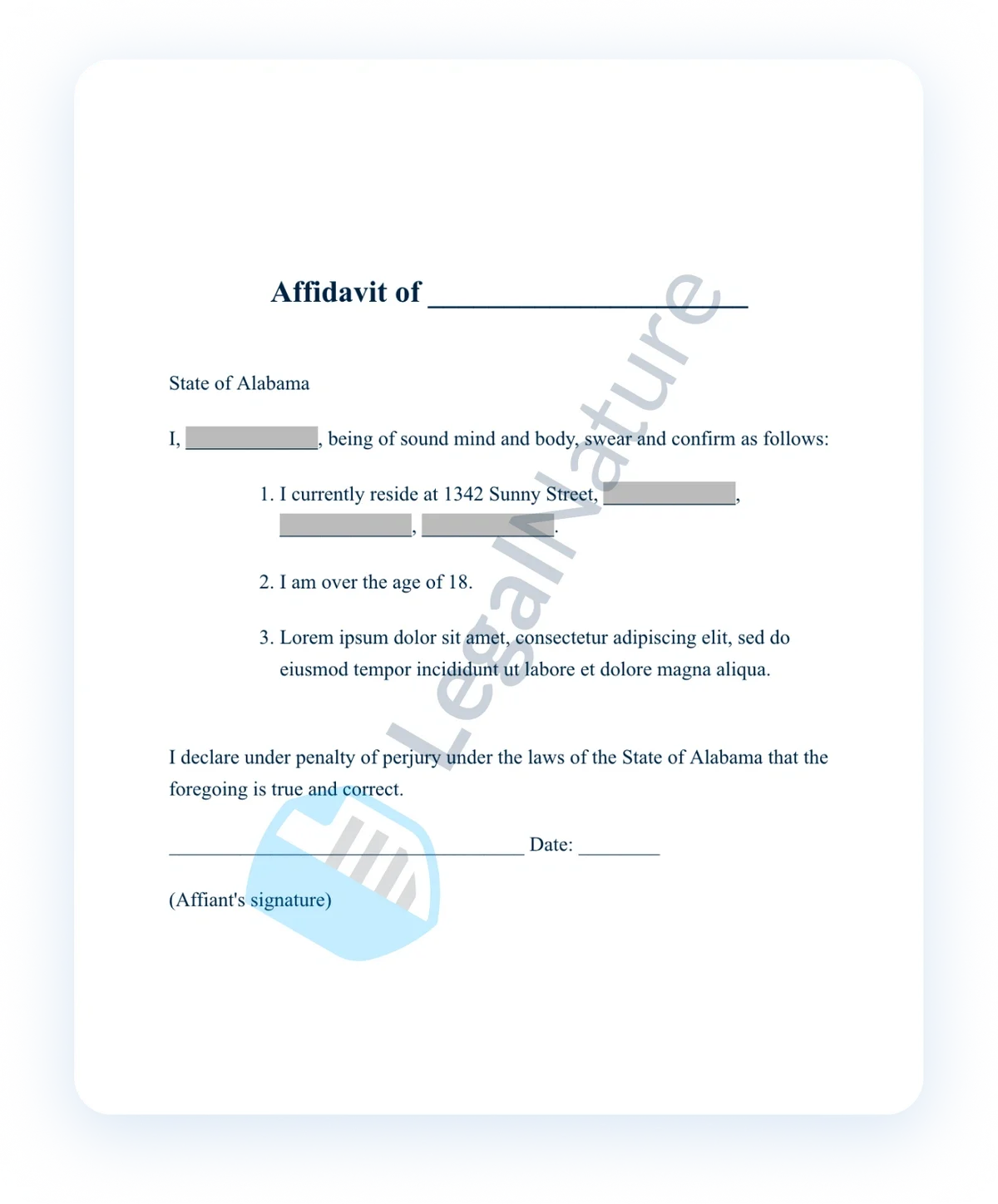
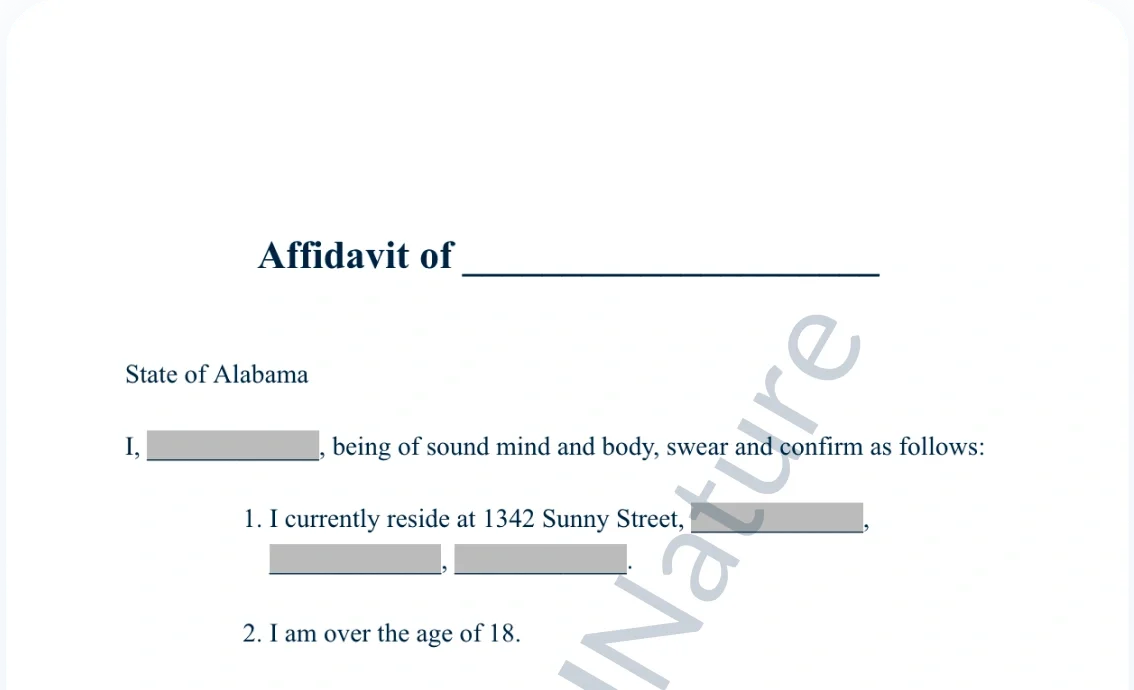
A general affidavit is a sworn statement in writing used to establish any fact under oath and may be used in a broad variety of circumstances.
Select a state


What is a general affidavit?
A general affidavit is a sworn written statement of facts that can be used for various legal, business, or personal purposes when you need to formally declare the truth of a statement under penalty of perjury. Unlike specialized affidavits designed for specific situations (such as a specific type of affidavit or other sworn documents like name change affidavits or affidavits of heirship), a general affidavit provides flexibility to document almost any factual statement that requires verification under oath.
Need a specific affidavit? Choose one below:
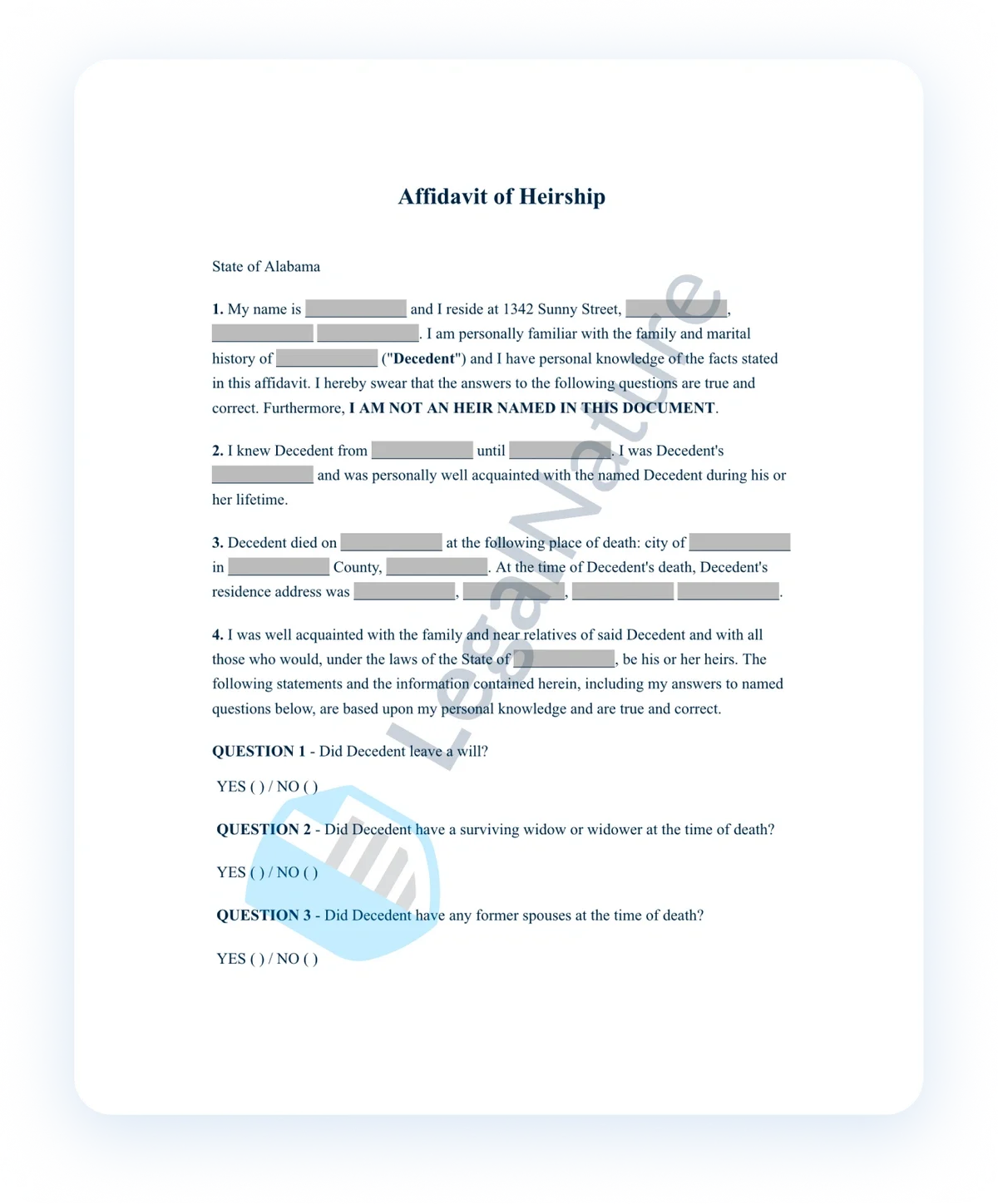
Affidavit of Heirship An affidavit of heirship is a sworn legal document that identifies the heirs of a deceased person who died without a will, typically used to establish ownership rights to the decedent’s property without going through formal probate proceedings.
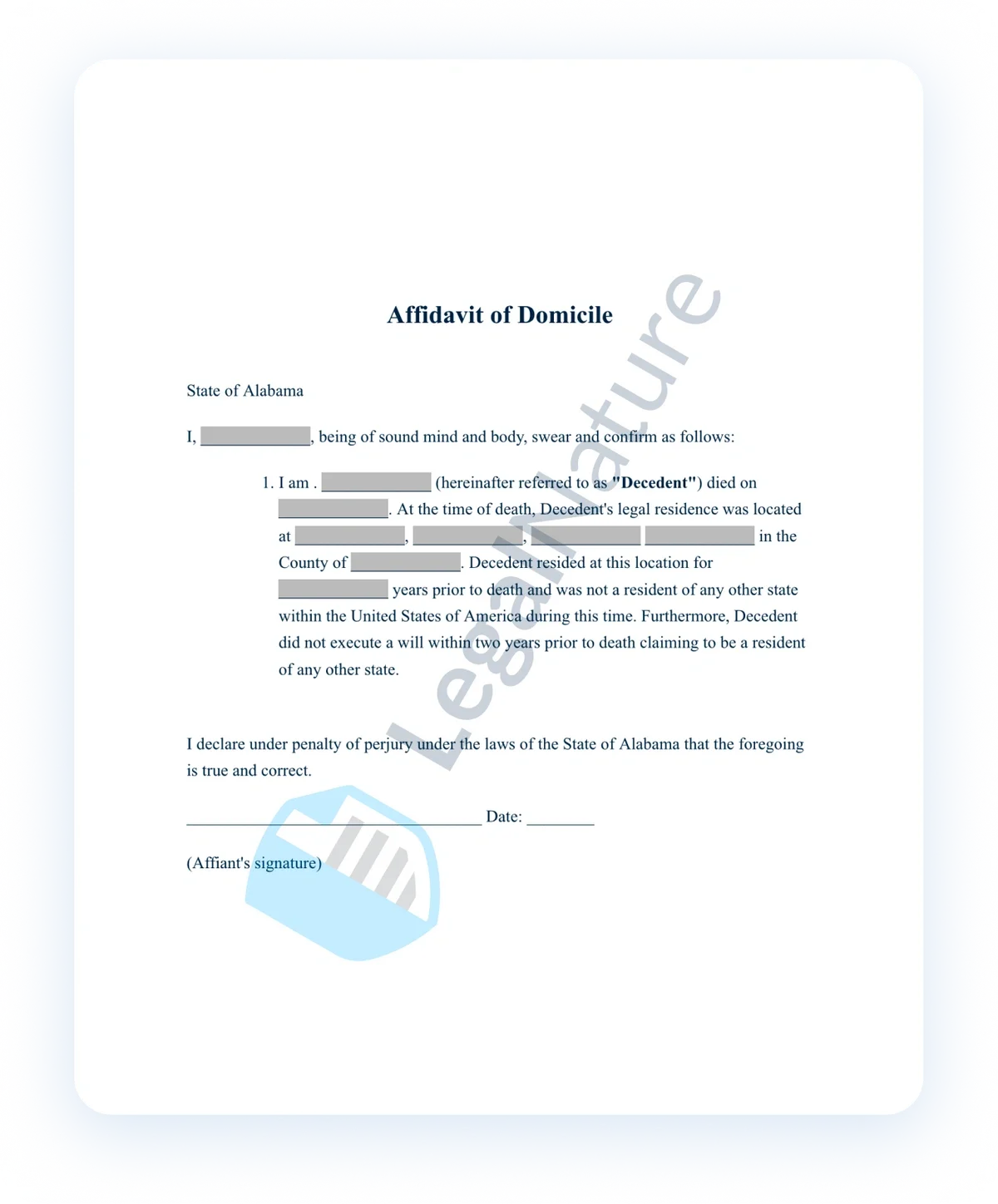
Affidavit of Domicile An affidavit of domicile is a sworn statement that declares where a deceased person had their permanent legal residence at the time of death. It is used to verify where the deceased person lived during their lifetime and may be required by financial institutions to transfer stocks or other securities, close accounts, or settle estate matters.
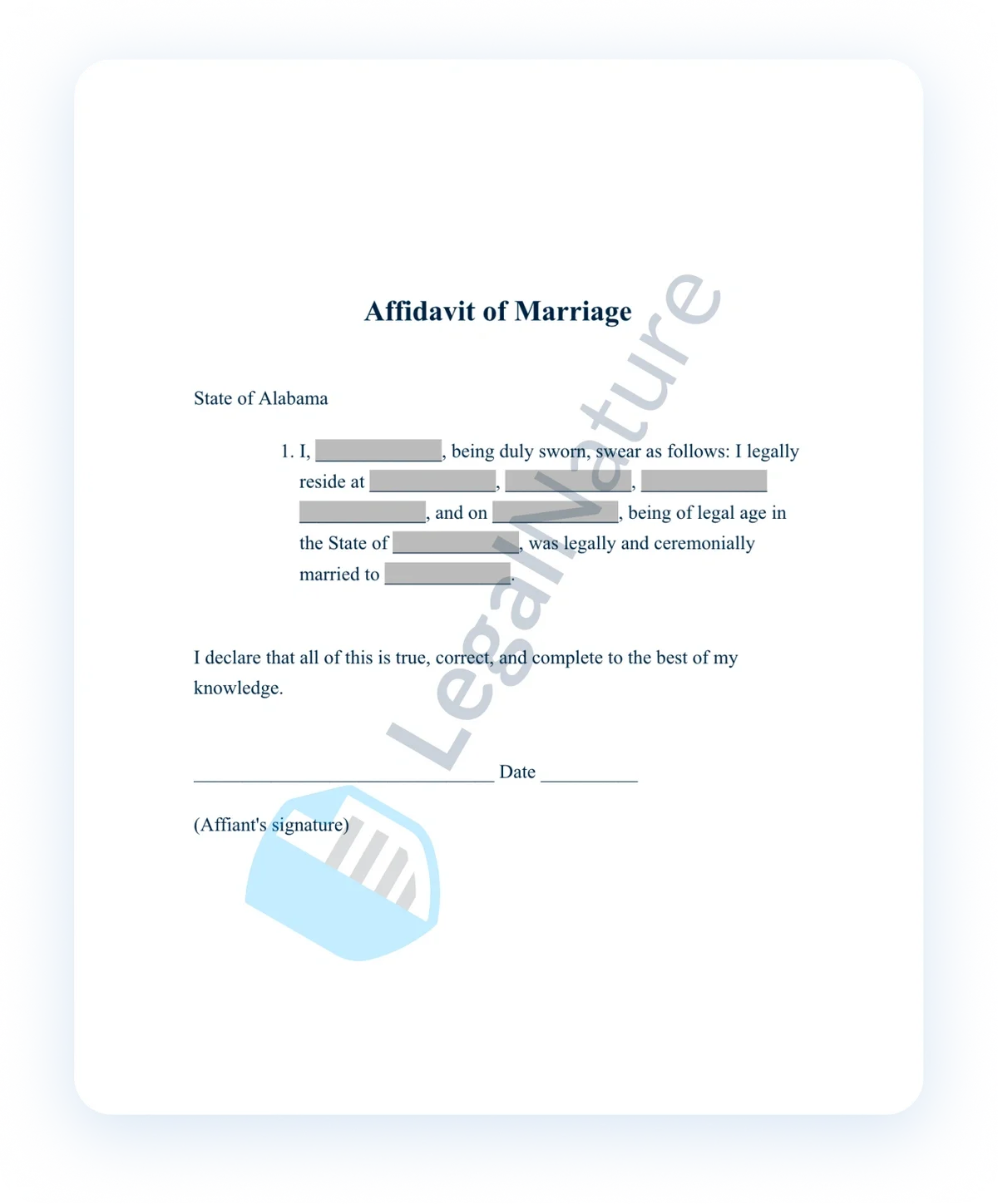
Affidavit of Marriage An affidavit of marriage is a sworn statement that confirms a marital relationship exists or existed, commonly used when official marriage certificates are unavailable, lost, or not recognized, particularly for immigration, name changes, insurance claims, or legal proceedings.
Create a general affidavit in your state
When to use a general affidavit
Personal Documentation:
- Proving residency for school enrollment, voter registration, or license applications
- Confirming identity when official documents are unavailable
- Attesting to a name change from marriage, divorce, or personal preference
- Documenting the loss of important papers like diplomas, titles, or certificates
Legal Proceedings:
- Supporting court filings with factual statements when live testimony is not required
- Providing evidence in small claims, family law, or civil disputes
- Establishing facts for default judgments or uncontested matters
Business and Financial Matters:
- Verifying business ownership, authority, or operational details
- Confirming debt payment, contract performance, or business relationships
- Supporting loan applications, credit disputes, or financial transactions
Government and Administrative Uses:
- Meeting requirements for passport applications, immigration proceedings, or visa petitions
- Providing proof for Social Security, veterans' benefits, or public assistance programs
- Satisfying documentation needs for professional licenses or certifications
Estate and Family Matters:
- Establishing family relationships for inheritance or custody issues
- Documenting care arrangements, guardianship facts, or dependent relationships
- Supporting insurance claims or beneficiary designations
A general affidavit is appropriate whenever you need a flexible, legally binding sworn statement and no specialized affidavit form is specifically required by law or the requesting party. General affidavits can also be used for other reasons, such as supporting legal claims or verifying facts in unique situations.
Create your general affidavit in 3 easy steps
Collect Information
Gather all the relevant information to complete your document. This may include the name and address of the party or parties and a list of any statements of fact needed for the affidavit's purpose.
Answer Key Questions
Use the information you collected to complete the general affidavit. We make this easy by guiding you at each step of the way and helping you to customize your document to match your specific needs.
Review, Sign, and Notarize
It is always important to read your document thoroughly to ensure it matches your needs and is free of errors and omissions. You must sign the affidavit in front of a notary public. When using a notary, always be sure to wait to sign the document until he or she is present.
Why use a general affidavit?
Legal Weight Without Court Appearance A general affidavit carries the same legal authority as sworn testimony in court, allowing you to establish facts officially without appearing before a judge or attending a hearing—saving time and avoiding courtroom procedures. This makes affidavits a practical alternative to live testimony, especially when in-person appearances are not feasible or efficient.
Cost-Effective Alternative to Formal Proceedings Creating a notarized affidavit costs significantly less than hiring attorneys, filing court motions, or initiating formal legal proceedings, making it an economical solution for documenting facts that do not require litigation.
Universally Accepted Documentation Courts, government agencies, financial institutions, and businesses across all 50 states recognize properly notarized affidavits as legitimate legal documents, providing a standardized format that satisfies diverse documentation requirements.
Flexibility for Unique Situations Unlike specialized affidavit forms limited to specific purposes, a general affidavit adapts to virtually any factual situation, from confirming unusual circumstances to documenting facts that do not fit standard form categories.
Penalty of Perjury Creates Credibility Signing under oath with criminal penalties for false statements gives your affidavit significant credibility with institutions and officials who need assurance that your claims are truthful and accurate.
Permanent Record of Facts An affidavit creates a dated, notarized record that preserves facts at a specific point in time, which is valuable when memories fade, witnesses become unavailable, or circumstances change years later.
Expedites Administrative Processes Many agencies and institutions accept affidavits as sufficient proof without requiring additional investigation, documentation, or verification, streamlining applications, claims, and requests that might otherwise face delays.

Why choose LegalNature?
General affidavit help guide
An affidavit is a written sworn statement by the person making it (called the “affiant”) as to some special knowledge that he or she possesses. A general affidavit is used when the circumstances do not call for the use of a specific form like an affidavit of domicile. An affidavit is commonly used in circumstances where an affiant cannot or is unavailable to provide testimony in person. In such cases, the affiant must write or draft the affidavit as a formal alternative to appearing in court, ensuring all relevant facts are clearly presented in writing. It is important to note that an affidavit must be made voluntarily and should not be influenced by anyone other than the affiant. An affidavit carries the same weight as court testimony and must be sworn to be truthful before a notary.
The Parts of an Affidavit
The affidavit starts with a heading. The heading may be made of a case heading if the affidavit is for an open case, or it may simply say “Affidavit of [your name]” if you do not have an open case but need to swear to something. The case heading includes the court your case is being heard in, the case number, and the names of the plaintiff and defendant. After the case heading or general title, the county and state where you will sign the affidavit will be listed.
The very first section contains your name in a sentence that generally states, “Before me comes [your name], whose residence is [address, including city, county, and state], and hereby swears to the following facts under penalty of perjury.” Depending on who drafted the affidavit, that sentence may vary in wording, but it will always state that you, the affiant, swear that the following account of events is true and correct to the best of your knowledge. The affidavit's contents—such as the statement of authority, body, oath, signature, notarization, and any supporting exhibits—are crucial for ensuring the document’s legal validity and credibility in legal proceedings.
The following paragraphs usually each contain one fact. After the facts are laid out, the affidavit usually contains the words, “Further Affiant Sayeth Naught.” This means that you have said all you have to say on the matter.
Next come the signature lines and notary section. When you sign the affidavit, you are swearing that the facts in the document are true and correct. You are also swearing that the facts are true and correct when the notary signs the notary section.
Using an Affidavit as Admissible Evidence
An affidavit is admissible evidence, although some courts may require you to testify to the affidavit or they may consider it hearsay. Since hearsay is not admissible as evidence, your affidavit may not be used for evidence if someone objects to it unless you testify. Thus, never assume that just because you signed an affidavit that it will get you out of testifying in court as a witness. Sometimes courts may have local rules that will state whether an affidavit is considered hearsay or not. Your attorney will let you know if you need an affidavit, have to testify, or if you need an affidavit and will have to testify.
Restrictions on Affidavits
No restrictions for age are in place for signing an affidavit. However, you must be of sound mind and you must understand what you are signing and why you are signing it. Keep in mind that an affidavit is signed under oath. Generally, you will not be asked to sign an affidavit unless you are over the age of 18. However, minors may be asked to sign an affidavit in a family court matter, as long as the minor is of sound mind and is of an age where he or she is old enough to understand the facts and that the minor is signing a document that must be true and correct.
Consequences of Signing an Affidavit
Before you sign an affidavit, keep in mind that there are legal consequences to signing an affidavit with false facts. Since you are signing a document under oath, it is the same as testifying in a court of law. If you provide information that is false or lie on the affidavit, you could be fined for perjury. Fines could include monetary fines, community service, and even jail time. The punishment and the severity of the punishment vary from state to state.
When You Might Need an Affidavit
Several types of cases require an affidavit, and in some cases an affidavit is voluntary. In family law, you will have to complete a financial affidavit as part of the discovery process. However, that is not quite the same as a written affidavit in that you are not writing out a series of facts. In other cases, you may have to draft an affidavit in the following circumstances:
- To state that you received legal documents
- To notify a creditor or other third party of the death of someone
- To notify someone, such as a spouse during post-dissolution proceedings, of a change in circumstances
- To verify residency
- To make a formal statement as a witness in court hearings
- To verify a name change, usually needed if you are newly married or got divorced and are reverting back to your maiden name
- To claim assets or property
- To confirm another person's identity if their identity has been stolen
Writing an Effective Affidavit
An affidavit is not written in typical paragraphs. Each paragraph is numbered and usually contains one fact. To ensure that the affidavit is easily understood, follow these best practice tips:
- Keep legal language out of the affidavit as much as possible.
- Keep the sentences short.
- Keep the affidavit as short as possible.
- Make sure your thoughts are organized and in the proper order if you are relating your actions in an event.
- Do not use inflammatory language.
- Leave any drama out of it. Just state the plain and simple facts.
- Proofread the affidavit for spelling and/or grammatical errors.
Keep in mind that the affidavit may speak to your credibility, so following these simple tips will make you look more professional and will not negatively affect your credibility.
Types of Affidavits
You may be asked to draft a general affidavit stating the facts of an event that you witnessed or that you were part of. Certain court cases also have different types of affidavits that you may have to sign.
- Financial affidavits are used in family law. Whether you are going through divorce proceedings or are separating and asking the court for temporary child and/or spousal support, you may have to provide information about your assets, liabilities, and income.
- Small estate affidavits are used when your spouse passes away without a will. You might be asked to provide a small estate affidavit if a close relative passes without a will and he or she does not have a spouse. The affidavit requires you to swear that you should be responsible for managing the person's estate and distributing any assets that may be left after the estate bills and creditors have been paid.
- An affidavit of death is used to notify the court, a company, or some other entity that a person has passed away. You may have to attach a copy of the person's death certificate. At the least, you will need to provide the person's full name, birth date, and date of death.
- Support affidavits are used to show a visa applicant has plenty of financial support if he or she is allowed to enter the country.
- An affidavit of heirship is used to show that you have the legal right to the assets of a relative that has passed away. When you sign this affidavit, you are swearing that you are the rightful heir of the deceased person.
- A personal information theft affidavit is used if someone's identity is stolen or compromised. The affidavit is for banks, credit agencies, and creditors, and it swears that a person's ID was stolen. This affidavit is often required in order for the victim to start recovering their identity.
- An affidavit of residence is often used in family law but may be used in other types of cases. It may also be used to show residence information for employment purposes or so your children can attend school in their district.
- If you have changed your name, you may have to draft an affidavit of name change for companies or entities. You will usually have to list your former name, the state where the name change took place, and your current name.
- You might need an affidavit of domicile when you are probating a will or if you have certain types of trusts. The affidavit of domicile is different from the affidavit of residency as your domicile is your legal residence, not where you may be temporarily living. It is common for those in the military to have one residence (where they currently live) and a domicile residence (where they normally live when they are not stationed elsewhere).
- In some cases, you might need an affidavit of marriage. This affidavit simply states that you are legally married. It could take the place of a marriage certificate if you lose the certificate. You might use it to apply for insurance or some financial accounts. It may also be used in states that have common law marriage, as you do not have a marriage certificate if you are married by common law. The affidavit includes the wedding date, town, county, and state of marriage, and your name and your spouse's name. Both you and your spouse must sign the affidavit. In most states, it must be witnessed.
- An affidavit for service of process is generally used by attorneys and businesses that serve court documents. This affidavit states that documents were served on another entity or person by a specific person. The affidavit includes who the documents were served on and the date and time the documents were served.
- An affidavit of debt states that someone owes a specific amount to an entity or another person. These are common in bankruptcy cases or may be used when a company is getting ready to close down. The original contract is more valuable than an affidavit when proving debt, so you should use that if possible. Furthermore, if you have to prove that someone owes you money, an affidavit is not enough—you do need the original contract.
Exhibits and Attachments
Exhibits and attachments are essential elements that can significantly strengthen an affidavit by providing supporting evidence for the claims made in your sworn statement. When you include exhibits—such as documents, records, or photographs—you are giving your affidavit additional legal weight, making it a more persuasive and credible piece of evidence in court or business transactions. For example, in a case involving a deceased person, you might attach a copy of the death certificate or a relevant will as an exhibit to your affidavit. In business matters, exhibits could include contracts, invoices, or correspondence that substantiate your statement.
To properly include an exhibit, clearly reference it within the body of your affidavit (e.g., “See Exhibit A: Copy of the contract dated January 1, 2024”) and attach the document at the end. Each exhibit should be labeled and described so that its relevance to your claims is unmistakable. This process helps the court, judge, or any other authorized official reviewing your affidavit to verify the facts and rely on your statement as a formal, official record. Whether you are documenting a business transaction, supporting a legal claim, or providing evidence in a court case, well-organized exhibits can make your affidavit a more robust and effective legal document.
Formalizing an Affidavit
For an affidavit to be valid, it must be notarized. Since a notary is swearing that it is your signature on the affidavit, the document must be signed in front of a notary. If the notary does not know you, he or she will ask to see your identification. The identification must be a valid form of photo identification such as a non-expired passport or driver's license.
In some cases, the notary may have to perform a jurat. This means that you, as the signer, are swearing that the facts contained in the document are true and correct to the best of your knowledge. The notary will administer an affirmation or oath to you before the document is signed. Since a notary is not able to tell you whether you just need to notarize your signature or if he or she must perform a jurat, it is up to you to know which type of notary you need. Most legal documents, including affidavits, have a jurat written in the document as part of the notary's signature. In the case of an affidavit, the jurat is at the beginning of the affidavit and in the notary box.
Most law offices, banks, or post offices have a notary if you do not personally know a notary. In some cases, a notary will charge for his or her services, but in other cases the notary may not charge. This depends on state law and whether the institution requires the notary to charge a fee. In many cases, if you have an account at a bank, the bank may not charge a fee even though it could.
Seeking Legal Advice
When preparing an affidavit, especially for use in court cases, business transactions, or other official purposes, seeking legal advice can be invaluable. A lawyer can help ensure your affidavit is a legally valid document that meets all requirements for legal validity in your jurisdiction. Legal professionals are skilled at reviewing the structure and content of sworn statements, making sure that your document is clear, accurate, and complete. They can also advise you on the differences between affidavits and other types of declarations, helping you choose the right form for your needs, whether you are dealing with marriage, identity verification, insurance matters, or other examples.
Consulting a lawyer is particularly important if your affidavit will be used as evidence or testimony in court, or if it involves complex claims or sensitive information. Legal counsel can guide you through the process, from drafting the affidavit to ensuring it is properly notarized and filed. This reduces the risk of errors that could undermine your claims or the affidavit’s legal weight. By relying on professional advice, you can be confident that your affidavit will be accepted for official purposes, whether you are proving facts in a legal dispute, supporting a business transaction, or fulfilling requirements for government agencies.
Frequently asked questions
What is an affidavit?
An affidavit is a written statement of fact signed under oath.
When should I use an affidavit?
You can use an affidavit to establish any fact. Common uses of affidavits include the following:
- Name change
- Verification of residential address
- Age declaration
- Recording sensitive business information
- Court proceedings or arbitration
- Proof of identity
- Requesting a birth certificate or death certificate
What should I include in my affidavit?
You should include any relevant and truthful information that is within your personal knowledge. For example, you may enter, \"I was born on March 10, 1982\" and \"My current occupation is a physical therapist.\" Your name and address have already been included for you. Next, include any other relevant background information. Finally, provide a chronological description of the events and facts. Be sure to include the date and time of any events.
Who should sign the affidavit?
An affidavit should be signed by the affiant. An affiant is a person swearing that the statements contained in an affidavit are true to the best of their knowledge.
Does an affidavit need to be notarized?
Notarization is the process of certifying the authenticity of your affidavit. The notary public, or other certifying official, attests to the authenticity of your signature by checking identification, then sealing or stamping the affidavit. Notarization is recommended to establish and support the authenticity of your affidavit. In addition, you will be required to have your affidavit notarized if it will be used in court.
Create your general affidavit in minutes
Complete our form
;fill-opacity:1;'/%3e%3cpath%20fill-rule='evenodd'%20clip-rule='evenodd'%20d='M7.17816%205.46484C8.48591%205.46484%209.81742%206.23165%2011.1727%207.76529C10.8517%208.08628%2010.6467%208.28838%2010.5575%208.3716C10.4683%208.45482%2010.2514%208.6391%209.90659%208.92442C9.56182%209.20975%209.28244%209.40591%209.06844%209.51291C8.85445%209.6199%208.5721%209.73285%208.22138%209.85173C7.87067%209.97062%207.52293%2010.0301%207.17816%2010.0301C6.75017%2010.0301%206.35785%209.97656%206.00119%209.86957C5.64453%209.76257%205.28788%209.5783%204.93122%209.31675C4.57456%209.0552%204.29518%208.83229%204.09307%208.64801C3.89096%208.46374%203.58781%208.16355%203.18359%207.74745C3.95636%206.97469%204.64291%206.40107%205.24329%206.02658C5.84367%205.65209%206.48862%205.46484%207.17816%205.46484ZM7.17816%209.37024C7.61804%209.37024%207.9955%209.20975%208.31055%208.88876C8.6256%208.56776%208.78312%208.18733%208.78312%207.74745C8.78312%207.30757%208.6256%206.92714%208.31055%206.60615C7.9955%206.28516%207.61804%206.12466%207.17816%206.12466C6.73828%206.12466%206.36082%206.28516%206.04577%206.60615C5.73072%206.92714%205.5732%207.30757%205.5732%207.74745C5.5732%208.18733%205.73072%208.56776%206.04577%208.88876C6.36082%209.20975%206.73828%209.37024%207.17816%209.37024ZM7.17816%207.1768C7.17816%207.34324%207.23166%207.47996%207.33865%207.58696C7.44565%207.69395%207.58237%207.74745%207.74881%207.74745C7.8677%207.74745%207.98658%207.70584%208.10547%207.62262V7.74745C8.10547%208.009%208.01631%208.23191%207.83798%208.41619C7.65965%208.60046%207.43971%208.6926%207.17816%208.6926C6.91661%208.6926%206.69667%208.60046%206.51834%208.41619C6.34001%208.23191%206.25085%208.009%206.25085%207.74745C6.25085%207.4859%206.34001%207.26299%206.51834%207.07872C6.69667%206.89444%206.91661%206.80231%207.17816%206.80231H7.32082C7.22571%206.9212%207.17816%207.04603%207.17816%207.1768Z'%20fill='white'%20style='fill:white;fill-opacity:1;'/%3e%3c/svg%3e)
Preview and download your document
;fill-opacity:1;'/%3e%3cg%20clip-path='url(%23clip0_10486_8655)'%3e%3cpath%20d='M10.8931%205.49519C10.8004%205.45343%2010.6879%205.48908%2010.6427%205.57565L10.4595%205.92398L10.3128%205.85879L10.5058%205.49212L10.5069%205.48906C10.508%205.48703%2010.5091%205.48397%2010.5103%205.48194C10.54%205.4137%2010.5743%205.33324%2010.5864%205.24258C10.6239%204.97267%2010.5125%204.68749%2010.2874%204.47869C10.0733%204.28007%209.74562%204.16804%209.43445%204.18534C9.36934%204.18942%209.29984%204.20062%209.22812%204.21998C9.11446%204.25053%209.00302%204.30349%208.8982%204.37785C8.82316%204.4308%208.71833%204.52146%208.64661%204.64877L8.64551%204.65184L8.64441%204.65387L7.9603%205.95657C7.95698%205.96166%207.95369%205.96675%207.95037%205.97286C7.94705%205.97795%207.94485%205.98406%207.94265%205.99017L6.17057%209.36151C6.14408%209.41244%206.13085%209.46947%206.13305%209.5265V9.52752L6.17277%2010.6143C6.17718%2010.7202%206.22022%2010.819%206.29194%2010.8964L6.18712%2011.0919C6.14078%2011.1775%206.1794%2011.2814%206.27207%2011.3242C6.29856%2011.3364%206.32724%2011.3425%206.35483%2011.3425C6.42435%2011.3425%206.49056%2011.3069%206.52366%2011.2458L6.62516%2011.0553C6.64061%2011.0563%206.65495%2011.0573%206.6704%2011.0573C6.77412%2011.0573%206.87673%2011.0278%206.9628%2010.9687L7.91392%2010.325C7.93379%2010.3118%207.95254%2010.2955%207.96909%2010.2792C7.97241%2010.2761%207.97461%2010.2731%207.97793%2010.27C7.9989%2010.2476%208.01655%2010.2222%208.0309%2010.1957L10.1483%206.16942L10.2951%206.23461L9.35169%208.02823C9.30645%208.11379%209.34507%208.21768%209.43886%208.25943C9.46535%208.27165%209.49293%208.27674%209.52052%208.27674C9.59004%208.27674%209.65735%208.24109%209.68935%208.17896L10.7023%206.25293C10.7078%206.24581%2010.7133%206.23766%2010.7177%206.2295C10.7222%206.22134%2010.7244%206.21422%2010.7277%206.20606L10.9804%205.72533C11.0255%205.64082%2010.9858%205.53694%2010.8931%205.49519ZM6.73994%2010.6907C6.70574%2010.7131%206.6627%2010.7182%206.62408%2010.7049C6.61857%2010.7019%206.61305%2010.6988%206.60643%2010.6958C6.60312%2010.6948%206.60092%2010.6937%206.5976%2010.6927C6.5656%2010.6723%206.54575%2010.6398%206.54463%2010.6041L6.51814%209.89623C6.76641%2010.0745%207.05219%2010.2028%207.35673%2010.2741L6.73994%2010.6907Z'%20fill='white'%20style='fill:white;fill-opacity:1;'/%3e%3cpath%20d='M5.59896%2011.03C5.55151%2011.029%205.49634%2011.03%205.43897%2011.03C5.13885%2011.0331%204.57941%2011.0382%204.40067%2010.8538C4.36976%2010.8222%204.33005%2010.7652%204.3444%2010.647C4.38634%2010.314%204.58935%209.96362%204.76811%209.65499L4.79789%209.60305C4.85638%209.50221%204.91707%209.40036%204.97664%209.30056C5.14766%209.01537%205.32421%208.72%205.46433%208.40935C5.56806%208.18018%205.62542%207.96426%205.63536%207.7697C5.64859%207.50897%205.57799%207.28183%205.42571%207.09441C5.24365%206.86932%204.97774%206.70431%204.61361%206.58821C4.31128%206.49145%203.97806%206.44154%203.68455%206.39672C3.55215%206.37635%203.42635%206.35801%203.3105%206.33561C3.20899%206.31626%203.10969%206.37737%203.08982%206.47108C3.06885%206.56478%203.13505%206.65645%203.23658%206.67479C3.36015%206.69822%203.48926%206.71756%203.62497%206.73793C4.18219%206.82248%204.81444%206.91719%205.1256%207.30118C5.30986%207.52832%205.30766%207.85628%205.11788%208.2759C4.98547%208.56925%204.81444%208.85545%204.64783%209.13248C4.58825%209.23231%204.52646%209.33619%204.46687%209.43905L4.43709%209.48998C4.2418%209.82609%204.02111%2010.207%203.97146%2010.6053C3.9472%2010.7957%203.99795%2010.9567%204.12152%2011.084C4.38082%2011.3498%204.8939%2011.3763%205.29223%2011.3763C5.34408%2011.3763%205.39485%2011.3763%205.44229%2011.3753C5.49855%2011.3753%205.55043%2011.3743%205.59456%2011.3753C5.59566%2011.3753%205.59566%2011.3753%205.59676%2011.3753C5.69939%2011.3753%205.78324%2011.2989%205.78434%2011.2041C5.78544%2011.1105%205.70266%2011.031%205.59896%2011.03Z'%20fill='white'%20style='fill:white;fill-opacity:1;'/%3e%3c/g%3e%3cdefs%3e%3cclipPath%20id='clip0_10486_8655'%3e%3crect%20width='7.91304'%20height='7.30435'%20fill='white'%20style='fill:white;fill-opacity:1;'%20transform='translate(3.08594%204.12891)'/%3e%3c/clipPath%3e%3c/defs%3e%3c/svg%3e)
Review and sign your document
