


Essential Guide to Starting a Business
Starting a business takes work. Knowing what’s needed and being prepared can help you avoid a lot of the stress and hurdles that slow you down.

Form your business for only $0 + state fee

This guide will remove the guesswork and lay out a clear and simple plan for you to follow to smoothly start and operate a successful business.
Table of Contents
Introduction to Starting a Business
Starting your own business is an exciting journey that begins with a great business idea and a clear vision for the future. Whether you are looking to launch a small business or grow into a larger enterprise, understanding the fundamentals of business formation is essential. Choosing the right business structure—such as a sole proprietorship, limited liability company (LLC), corporation, or partnership—lays the groundwork for your company’s legal responsibilities, tax obligations, and liability protection.
One of the first decisions new business owners face is whether to operate as a separate legal entity. Forming a legal business entity, like an LLC or corporation, helps protect your personal assets from business debts and liabilities. This separation is crucial for limiting personal liability and ensuring that your personal and business finances remain distinct. Additionally, registering your business with the proper authorities and obtaining the necessary licenses and permits will help you comply with state and local governments’ requirements.
By taking the time to plan carefully and understand your options, you will set your new business up for long-term success. This guide will walk you through each step, from creating a business plan to managing daily operations and planning for the future.
Step 1: Create a Business Plan
Your business model should ideally be rock solid from the beginning. It is the foundation of your company, and you will likely spend countless hours working to bring it to fruition. This is why it is imperative that you spend time on the frontend assessing your business’s goals and challenges.
It is recommended that all would-be business owners create a complete business plan prior to starting a business. This is more than a simple thought exercise. A business plan summarizes the business’s mission statement, goals, product or services strategies, marketing strategies, financial projections, regulatory requirements, and exit strategy. It also usually analyzes its market and industry including the likely competitors. During this planning stage, it is important to consider intellectual property protection, such as trademarking your business name, to safeguard your brand and avoid potential legal issues.
If you want to iron out your business plan, check out our business plan builder. However, if your business plan is already complete, then you are ready to move on to the next step: choosing your legal structure.

Step 2: Choose Your Entity Type
The next step is to choose the type of business entity that best matches your specific needs. Keep in mind that requirements for incorporating a business vary by state, so it is important to check your local laws before proceeding. The most common choices include a sole proprietorship, general partnership, limited liability partnership (a business entity that offers limited liability to all partners), LLC, corporation, and nonprofit. To help you choose, here is a simple breakdown of the differences between each of these structures, including which ones may offer specific tax advantages:
Sole Proprietorship
Ownership
A sole proprietorship is an enterprise owned by a single individual, known as the “sole proprietor.” A sole proprietorship automatically arises anytime a single person conducts business. It does not need to be registered with the government in order to be official. The name of a sole proprietorship is simply the name of the owner. If a sole proprietor wants to do business under a different name, they must file a “Doing Business As (DBA)” with their state government.
Personal Liability
There is no legal distinction between a sole proprietorship and the individual who owns it. As such, sole proprietors are personally liable for their business’s debts, losses, and contractual obligations. This means that if a sole proprietor fails to repay a debt or to fulfill a contract, then a court may hold them personally responsible. This can result in having to file for bankruptcy or pay a garnishment drawn out of any regular income they receive.
Taxation
Sole proprietors simply file their taxes on their personal annual tax returns each year in the same way as most individuals. This is known as “pass-through taxation,” because the responsibility for paying taxes passes through from the business to the individual owner. However, since they do not have taxes withheld from their business income, they must pay their taxes quarterly. The quarterly taxes include income taxes and self-employment taxes for medicare and social security.
Maintenance
Sole proprietorships are easy to maintain, as the owners have no special requirements to meet other than keeping records of their dealings and paying taxes. Note that certain types of businesses, such as those in the food, hospitality, construction, liquor, or firearm industries, may be required to obtain government permits or licenses in order to be allowed to conduct business.
General Partnership
Ownership
A general partnership is the same as a sole proprietorship in nearly every way except that it has multiple owners. Like a sole proprietorship, a partnership is automatically formed whenever two or more people carry on the same business together.
Personal Liability
Like a sole proprietorship, partners may be held personally liable for the partnership’s debts and other legal obligations. Regardless of their involvement, all partners share responsibility and liability for the obligations of the partnership unless otherwise agreed upon or provided by law. In order to explicitly limit the responsibility of one partner, business owners should form a limited partnership instead by filing the proper certificate with their Secretary of State or other business formation entity.
Taxation
Like a sole proprietorship, partners file their annual taxes on their personal tax returns and are responsible for paying quarterly taxes to the IRS and their state tax authority.
Maintenance
Like a sole proprietorship, general partnerships are easy to form and maintain compared to other entity types.

Limited Liability Company (LLC)
Ownership
LLCs may only be formed by registering with the appropriate state government office and filing LLC articles of organization. The owners of an LLC are called “members,” and an LLC may be formed with only a single member or with many. The law provides members with great flexibility in how they choose to structure their ownership rights and responsibilities.
Personal Liability
As implied by its name, an LLC “limits” its owners from personal liability for the LLC’s debts and legal obligations. For example, if an LLC is sued by creditors and a court holds that it is liable to the creditors, then the LLC itself will be responsible for repayment out of its own assets, not the personal assets of the members. This is one of the huge advantages of forming an LLC compared to a sole proprietorship or partnership.
Taxation
The IRS allows LLCs to choose whether they want to be taxed like a sole proprietorship with pass-through taxation or like a corporation with double taxation.
Maintenance
While LLCs require some initial effort to be set up and registered with their state, they require much less ongoing work than maintaining a corporation.
Corporation
Ownership
Corporations may only be formed by registering with the appropriate state government office. The owners of a corporation are called “shareholders,” and a corporation may be formed with only a single shareholder or with many. Corporations have to follow more ownership rules than LLCs. However, one major advantage of forming a corporation is that they are allowed to sell ownership shares (called “stock”) publicly so long as they follow the federal Securities and Exchange Commission (SEC) rules regarding public stock offerings. This can help corporations raise capital faster than other entity types.
Personal Liability
Like an LLC, shareholders are protected from personal liability for the corporation’s debts and legal obligations.
Taxation
Corporate income receives double taxation. The income is taxed when the corporation pays its quarterly taxes and then again when the shareholders pay their individual income taxes.
Maintenance
Corporations must meet various state requirements in order to continue doing business. These include filing annual reports, creating bylaws, holding regular board meetings, and issuing stock. Compared to other entities, these requirements are usually more time consuming and costly.
Types of Corporations
- C Corporations: C corps refer to corporations that fall under IRS subchapter C. These are the standard for-profit corporations.
- S Corporations: S corps refer to corporations that fall under IRS subchapter S. These are corporations that file a special request with the IRS to receive pass-through taxation status. They must meet specific requirements in order to qualify, including having fewer than 100 shareholders, only one class of stock, and no non-resident alien shareholders.
- Benefit Corporations: Benefit corporations are a relatively new type of corporation, available in 35 states and the District of Columbia. Benefit corps are for-profit corporations that have a legally defined purpose of creating a positive impact on society, workers, the community, or the environment. This means that the corporation is allowed to make decisions that are not strictly motivated by profit, preventing shareholders from pushing for profit at the expense of its other, more socially minded goals.
- Nonprofit Corporations: Nonprofit corporations are formed to carry out charitable, educational, religious, literary, or scientific purposes. Unlike other types of corporations, nonprofit corporations do not issue stock or have owners. Instead, they are controlled by a board of directors. While nonprofit corporations are allowed to earn a profit, they are not allowed to disburse their profits to the directors. Nonprofit corporations may become exempt from paying taxes but only if they submit an application with the state and federal government and are approved. In order to maintain their tax-exempt status, they must meet regular reporting requirements aimed to show that they are using their funds for their approved purposes. While their directors and employees may be paid a salary, these salaries are made public in their reports and must meet certain criteria for reasonableness when compared to similar nonprofits in their industry.
How to Choose an Entity
Everybody weighs the factors differently in terms of what is important to them and their business. Starting your own company gives you personal ownership and control over business decisions, allowing you to shape the direction and success of your venture. Some business owners favor entities that are easy to start and manage, while others prioritize limiting their personal liability or reducing their tax burden.
With that said, many business owners these days find that an LLC offers the best all-around option for their needs. This is because LLCs combine the pass-through taxation associated with sole proprietorships and partnerships with the limited personal liability advantages of corporations. LLCs are flexible enough to adapt to a small business with no employees as well as the needs of a larger company with hundreds of employees and contractors. They are inexpensive to start and maintain compared to corporations and have relatively few ongoing requirements that must be met. Lastly, should you decide down the road that a corporation is more beneficial, you can always change your entity type by filing an application with your state office.
However, if you know that your business will need to attract a lot of initial capital quickly by offering shares to many investors, then a corporation might make sense. Corporations can also make sense for tax reasons depending on the type of business involved or because investors are more comfortable with the structure.
 LLCS-CorpC-CorpNonprofitLLCS-CorpC-CorpNonprofitLLCS-CorpC-CorpNonprofitLLC
 S-CorpC-CorpNonprofitLLCS-CorpC-Corp
 NonprofitLLCS-CorpC-CorpNonprofitLLCS-CorpC-CorpNonprofitLLCS-CorpC-CorpNonprofitLLCS-CorpC-CorpNonprofitLLCS-CorpC-CorpNonprofit
Step 3: Register the Business
Normally every business entity needs to register with their state's office, typically the Secretary of State's office, in order to be legally formed. In many states, you can register online through the state's office website, making the process more convenient. The registration process involves preparing a document to be filed with the state that includes all the necessary information required by the state office. In most states, the document that LLCs are required to file is called articles of organization, while corporations file articles of incorporation. These documents are usually prepared for you by attorneys or services like LegalNature that help you draft documents that conform to the state’s requirements. This is because trying to learn and navigate the registration process can be very time consuming and is usually the last thing you want to worry about when trying to focus on starting a business.
The only businesses that sometimes do not need to register with the state are sole proprietorships and partnerships. The default business name for these entities is simply the name of the owner or owners. For example, if a person named Samuel Harrison starts a sole proprietorship, then the name of the business is automatically just “Samuel Harrison.” However, if Samuel wants to name the business something else, then he is required to register the trade name with the state by filing a Doing Business As (DBA) form. The same applies to partnerships.
After registering your business, remember that you may also need to obtain a business license or permit depending on your industry and location.

Step 4: Comply with State and Federal Regulations
Employer Identification Number
After your business is legally registered, you need to ensure that you have met a few other requirements. For instance, you may need to apply to the IRS to get an Employer Identification Number (EIN). An EIN is the tax number the IRS uses to identify your business. If you own a corporation, own a partnership, or have employees, then you will need to obtain an EIN. There are a few other instances where an EIN is required, but these are the most common. LegalNature is here to help you obtain an EIN for your business.
Licenses and Permits
Depending on your industry and where you are located, your business may also be required to obtain licenses and permits in order to operate. For instance, these are common for businesses in the food, hospitality, liquor, medical, and firearms industries. When you use LegalNature to register your business, you can also choose to have one of our experienced partners perform a license and permit check for you. This saves you from having to research your local city and state requirements.
Business Insurance
Next, you should determine whether you need to purchase business insurance. Most small businesses will at least need to obtain a minimum amount of business insurance though a Business Owner’s Policy (BOP). These normally cover the business in the event that it suffers a loss due to damage to the business’s physical property or losses due to liability claims against the business. They also cover you if you lose out on income due to such property damage or liability.
Business Bank Accounts
All businesses need to obtain a business bank account in order to keep the business’s financials separate from its owners. This is important for maintaining the separation that allows owners of LLCs and corporations to limit their personal liability for the business’s debts and legal obligations.
Essential Legal Documents
Lastly, complete your foundational legal documents needed to protect and operate your business. For instance, a general partnership needs to create a written partnership agreement to spell out the terms of each partner’s rights and responsibilities. Similarly, members of an LLC need to create an LLC operating agreement and member admission agreement. Shareholders of a corporation need a shareholder agreement and corporate bylaws. Corporations are also required to hold their first board meeting and record the meeting minutes, pass corporate resolutions, and issue stock. These documents are required in many states. Even when they are not strictly required by law, failing to have these foundational documents will expose your business to unnecessary liabilities and owner conflicts that are often devastating for young companies.
Compliance Checklist
- Obtain an EIN Get your EIN now
- Obtain required business licenses and permits Get started
- Purchase business insurance Check out the best offers
- Open a business bank account Find the best offer
- Complete foundational legal documents

Step 5: Assemble Your Team
Great businesses are built on the shoulders of great people. Consider the types of positions and skills needed to help your business thrive. Business owners are notorious for trying to take on too many responsibilities themselves. This can be a recipe for disaster. Besides managing its day-to-day operations, a business needs people to coordinate on sales, marketing, human resources, and administration. Stretching yourself too thin often means that nothing gets done as well as it should. Try to avoid this by attracting talented people who can support you.
If you do not have enough funds to pay employees at the beginning, keep in mind that many people may be willing to help you for little or no pay if they receive an ownership interest in the company. This is known as “sweat equity,” and it can be a great way to attract initial support.
When you are ready to hire employees and contractors, be sure to get your agreements in writing. Failing to do so is almost always a mistake, and anyone not willing to sign a contract is not worth doing business with.
As you assemble your immediate team members, also begin to identify suppliers, vendors, distributors, and other third parties that you will need to run and grow your business. Making these contacts early can help you avoid running into dead ends down the road. Learn about their needs and what they expect from their business partners.
Step 6: Grow Your Business
Now for the fun part. Help yourself do what you do best by setting up efficient operations from the very beginning. The first few years are the most difficult time for any new business but are also the most rewarding. While you might not see profit for a while, know that hustling to create a successful business model is going to pay off in the long run. Eventually, your business can become a well-oiled machine requiring only as much time as you want to invest. But for now, it is time to roll up your sleeves and think creatively about growing your business.
This can take many forms. For instance, often it is a good idea to collaborate with other established brands that can help boost your visibility. Get out in front of people as much as possible, using both digital and non-digital marketing strategies. This takes a consistent, sustained effort, not just a weekend at an industry show or a few local ads. Building a brand takes time, so stay positive and know that there WILL be many setbacks along the way. Keeping your company’s mission in mind will help you stay motivated.
Why Choose LegalNature?
Here at LegalNature we understand that starting a business from scratch can be a daunting proposition for anyone. Thankfully, you do not have to navigate it alone. LegalNature is a comprehensive, one-stop shop for every stage of starting and running a business. We are here to save you from having to learn all the nitty gritty requirements that often overwhelm entrepreneurs so that they can spend their time more effectively focusing on actually running their business. Here’s a list of our services and products that will save you an immense amount of time, energy, and money:
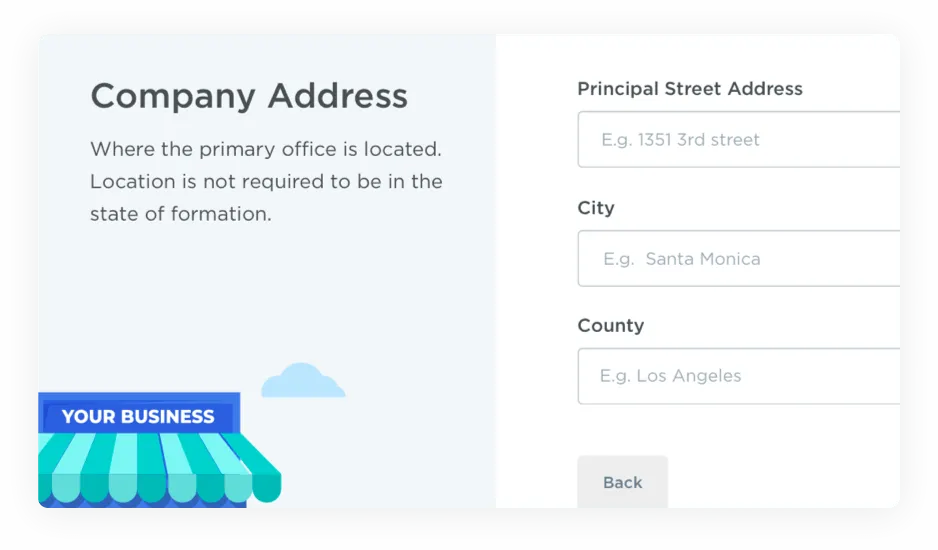
Business registration for LLCs, corporations, and nonprofits
Just complete a short questionnaire about the type of business you want to start and we will handle the rest.
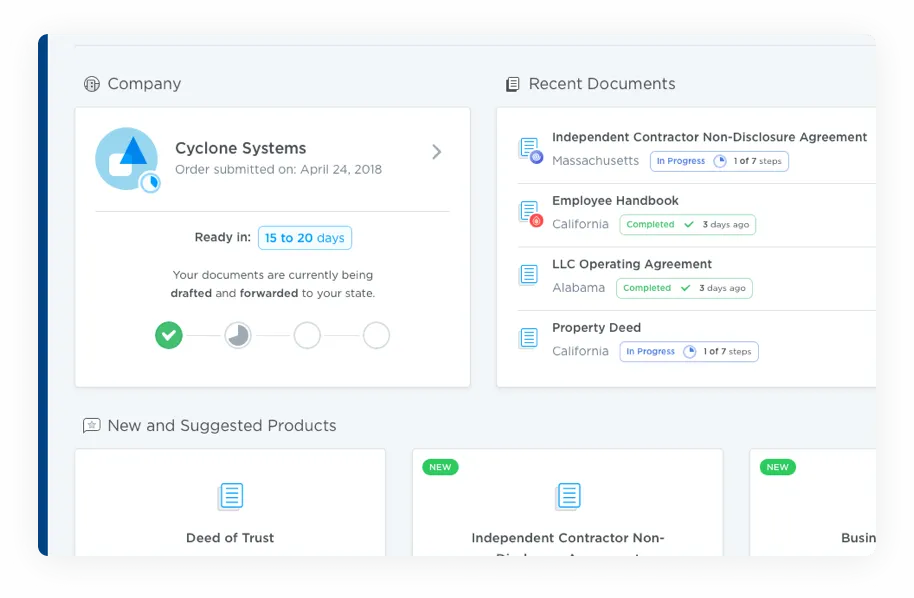
Personalized dashboard
We provide you with a secure and personalized dashboard that helps you review and manage your company at a glance and to create, edit, and store your legal documents at any time and from any device.
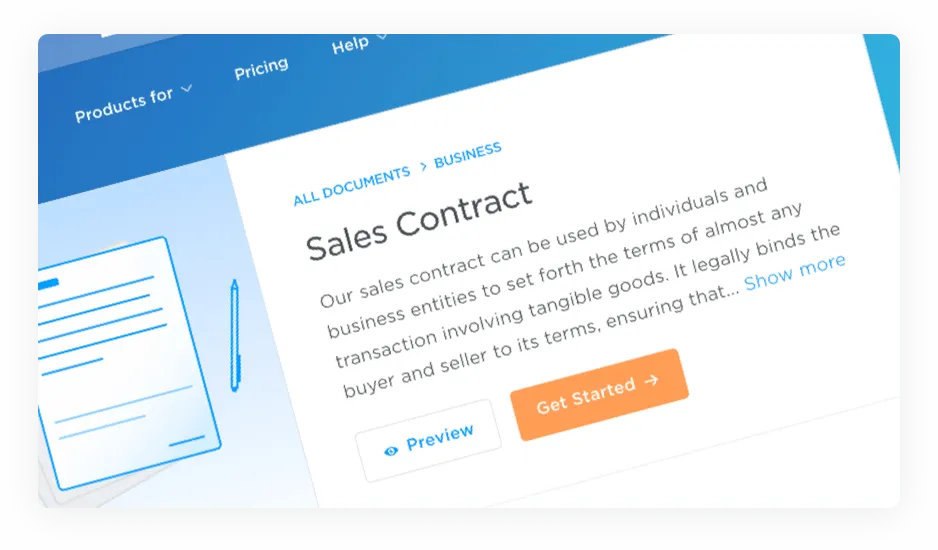
Legal documents
Gain access to our entire library of legal documents. This can save you from having to hire an attorney every time you need a contract.
Articles and information
Use our extensive knowledge base to continue learning tips and strategies for running your business.

Ready to officially start your business?
We'll handle everything. From completing your paperwork to filing and communicating with the state, our experienced specialists will help you launch your business without worries or delays.
